
Content Menu
● Why North Carolina Is a Strong Market
>> A Note on “Capacity” and “MOQ”
● Leading Hibachi Service Options in North Carolina
>>> Core Strengths
>>> Customization and Service Flexibility
>>> What Buyers Should Confirm Before Booking
>>> Core Strengths
>>> Core Strengths
>> 4. Hibachi Lit / Hibachi Now
>>> Core Strengths
>>> Core Strengths
>>> Core Strengths
>> Food-Safety and Permit Checks
>> Questions to Ask Every Provider
>> Choosing Only by Headline Price
>> Ignoring the Cooking Location
>> Treating Allergies as a Last-Minute Detail
>> Assuming “Mobile” Means “No Permit Questions”
>> Booking Without a Weather Plan
● The Less-Discussed Insider Tip
● Buyer’s Guide for Corporate Events
● FAQ
>> 1. How can I confirm whether a hibachi service has valid permits?
>> 2. Are private-home hibachi events subject to the same requirements as public festivals?
>> 3. What guest count is most economical for a mobile hibachi service?
>> 4. Can a mobile hibachi provider safely accommodate severe food allergies?
>> 5. What should a written quote include?
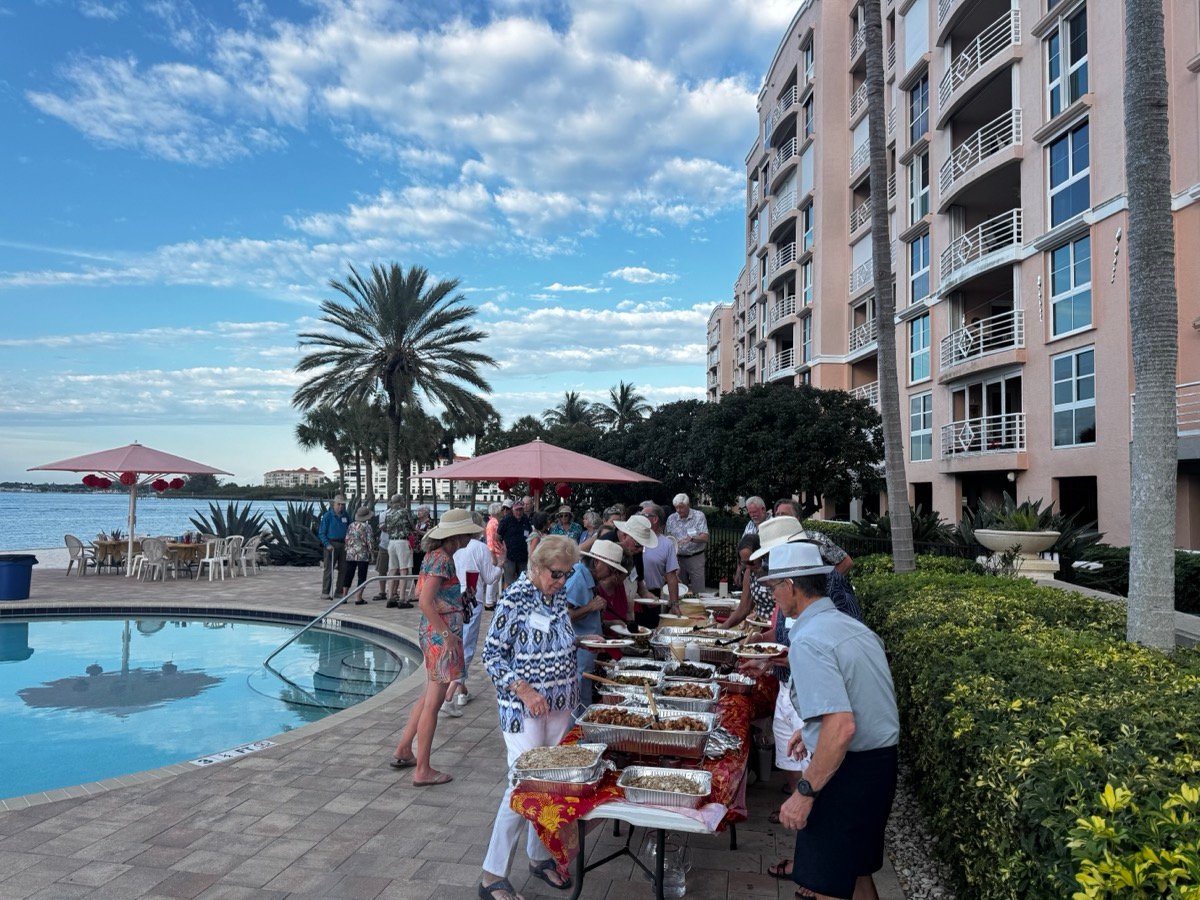
North Carolina has become an active market for mobile hibachi catering, private chef entertainment, backyard celebrations, and destination-rental dining. From Charlotte and Raleigh-Durham to Asheville and the Outer Banks, customers increasingly expect more than delivered food: they want an on-site cooking performance, freshly prepared meals, dependable event coordination, and a service team capable of working within private homes, vacation rentals, corporate venues, and outdoor spaces.
For hosts, event planners, property managers, and corporate buyers, selecting a hibachi service is not simply a menu decision. The right provider must combine food safety, chef consistency, equipment readiness, communication speed, dietary flexibility, insurance awareness, and dependable arrival logistics.
This guide reviews notable Hibachi Service in North Carolina options through a practical buyer’s lens. It focuses on suppliers that publicly present mobile hibachi, private-chef, backyard-catering, or event-oriented offerings. It is not a ranked certification of every operator in the state; availability, permits, pricing, and service territories should always be confirmed directly before booking.
The broader restaurant and foodservice market continues to show strong demand despite cost pressure. The National Restaurant Association projected U.S. restaurant and foodservice sales of approximately $1.55 trillion in 2026, illustrating the scale and continued resilience of experiential dining and catering demand.
Why North Carolina Is a Strong Market
North Carolina is well positioned for mobile hibachi service because it combines several demand drivers:
– Major population centers, including Charlotte, Raleigh, Durham, Greensboro, Winston-Salem, and Fayetteville
– University communities with frequent graduation, family, and group-event demand
– Corporate and technology hubs in the Raleigh-Durham region
– Large numbers of private homes with outdoor entertaining space
– Destination rentals in the mountains, lake regions, and the Outer Banks
– A strong wedding, vacation-rental, and family-celebration economy
Unlike conventional restaurant dining, private hibachi service brings the flat-top grill, ingredients, chef, service flow, and entertainment component to the customer’s location. This creates a more complex operating model. A provider must manage food transport, propane or power planning, grill sanitation, staff timing, traffic conditions, cooking-space limitations, weather risk, and venue-specific rules.
For this reason, buyers should evaluate hibachi providers like an event-service partner rather than only a food vendor.
How We Evaluated Providers
A credible hibachi operator should be assessed through transparent operational criteria rather than social-media appearance alone.
Core Selection Criteria
| Evaluation Area | What Buyers Should Verify | Why It Matters |
|---|---|---|
| Service coverage | Exact ZIP codes, travel zones, surcharge policy, and overnight-distance limits | Prevents last-minute travel-fee disputes or unavailable dates |
| Event capacity | Typical guest range, number of grills, chef availability, and large-group process | Determines whether the provider can manage corporate or multi-family events |
| Food-safety controls | Permits, inspection history where available, temperature-control procedures, and ingredient sourcing | Reduces foodborne-illness and compliance risk |
| Menu flexibility | Allergy process, vegetarian options, children’s meals, protein upgrades, and halal or dietary accommodation policies | Important for mixed guest groups and corporate events |
| Equipment readiness | Grill transport, propane handling, safety zone, rain policy, and setup requirements | Helps avoid venue rejection or unsafe setups |
| Booking discipline | Written quote, deposit policy, cancellation terms, guest-count deadline, and gratuity disclosure | Reduces unexpected costs |
| Communication | Response speed, pre-event checklist, location confirmation, and day-of contact process | Essential for private residences and rental properties |
| Reputation quality | Reviews, photo consistency, documented service areas, and complaint-resolution practices | Helps distinguish established teams from loosely organized operators |
A Note on “Capacity” and “MOQ”
In private catering, “MOQ” usually does not mean a manufacturing minimum order quantity. Instead, it often refers to one or more of the following:
– Minimum food spend
– Minimum number of paying adult guests
– Minimum event package price
– Minimum booking lead time
– Minimum revenue requirement for a long-distance service area
Always ask for the minimum in writing, especially for small birthday parties, weekday events, remote vacation rentals, or events outside a provider’s primary city.
Leading Hibachi Service Options in North Carolina
1. Hibachi Sake Sake
Best fit: Hosts and planners seeking a flexible, communication-focused private hibachi partner for birthdays, family events, holiday celebrations, graduation parties, corporate gatherings, luxury private dinners, backyard events, and outdoor catering.
Hibachi Sake Sake is positioned around the mobile, private-event side of hibachi rather than the traditional fixed-location restaurant model. Its practical value lies in its suitability for customers who need a responsive service team, customized planning, and a more personal coordination process.
For buyers planning events across North Carolina, Georgia, South Carolina, and Florida, regional operating knowledge can be especially useful. Multi-state service models require clear internal systems for travel coordination, chef scheduling, equipment movement, menu confirmation, and local venue requirements.
Core Strengths
– Designed around private and mobile hibachi experiences rather than walk-in restaurant traffic
– Suitable for birthday celebrations, family dinners, graduation parties, holiday events, corporate functions, and premium at-home experiences
– Can support backyard setups, outdoor venues, private residences, vacation-rental events, and selected event spaces
– Strong fit for small and mid-sized groups that require more flexible communication than standardized banquet packages
– Useful for buyers who want more detailed customization of guest count, dietary needs, location conditions, menu preferences, and event timing
Customization and Service Flexibility
For event planners, the most valuable service feature is often not a dramatic cooking show; it is the ability to solve operational issues before the chef arrives. A capable mobile hibachi provider should be able to clarify:
– Whether the cooking surface can be safely placed on the property
– Whether the event is indoors, outdoors, under a covered patio, near a pool, or at a rental home
– Whether the site has sufficient access for equipment loading
– Whether the group includes children, elderly guests, vegetarians, seafood allergies, or guests requiring lower-sodium options
– Whether the venue has noise, fire, parking, propane, or vendor-entry restrictions
– Whether the booking is a single-grill dinner or a multi-chef corporate event
Hibachi Sake Sake is a suitable option for buyers who value this consultative planning style, especially when the event is not a simple, standardized backyard dinner.
What Buyers Should Confirm Before Booking
Because service details can vary by location, date, event size, and chef availability, request a written confirmation covering:
– Exact service ZIP code
– Minimum booking requirement
– Travel fee, if applicable
– Menu inclusions and premium protein upgrades
– Guest-count deadline
– Weather contingency plan
– Grill safety and space requirement
– Deposit, cancellation, and rescheduling terms
– Whether tables, chairs, plates, and utensils are supplied or must be provided by the host
For a multi-state provider, this confirmation step is particularly important because operational rules and local venue requirements can differ across Florida, Georgia, South Carolina, and North Carolina.
2. Hibachi With Us
Best fit: Customers seeking statewide-style North Carolina coverage and a relatively straightforward at-home hibachi package structure.
Hibachi With Us publicly promotes private hibachi chef service across numerous North Carolina locations, including Charlotte, Raleigh, Durham, Greensboro, Winston-Salem, Fayetteville, Chapel Hill, Concord, Huntersville, Greenville, and Outer Banks locations. Its public information indicates an at-home model where the chef brings the grill, propane, and ingredients, while customers may be responsible for tables, chairs, plates, and utensils.
Its published North Carolina pricing information lists $55 per adult and $30 per child aged 4–12, with children under 3 eating free, although buyers should independently verify current prices, travel fees, minimums, and availability before booking.
Core Strengths
– Broad public-facing geographic coverage claims
– Clear positioning around at-home dining and private chef experience
– Suitable for birthdays, family events, cabin stays, and vacation rentals
– Publicly describes a simplified customer responsibility split: provider handles cooking setup; host supplies certain dining items
– Offers a defined booking workflow: select date and guest count, choose menu, confirm details, and host the chef on-site
Buyer Considerations
For remote or destination events, ask whether the quoted rate includes:
– Long-distance travel
– Mountain, coastal, or rural access
– Holiday-date surcharge
– Parking and loading complexity
– Rental-property vendor restrictions
– Weather or wind limitations for outdoor grilling
The company’s coverage claims are useful, but widespread coverage should always be checked against the actual event date and ZIP code.
3. Awesome Hibachi
Best fit: Raleigh-Durham and Triangle-area events requiring a local backyard hibachi format.
Awesome Hibachi publicly markets mobile hibachi catering and private chef services in Raleigh and surrounding Triangle communities, including Cary, Apex, Morrisville, Durham, Chapel Hill, Wake Forest, Holly Springs, Garner, and Fuquay-Varina.
The company describes an offering that includes the chef, food, setup, entertainment, and cleanup. Its public page lists an adult base rate of $60 per person, a $30 child rate for children under 13, and a $600 minimum spend, subject to verification at the time of booking.
Core Strengths
– Strong Triangle-area geographic focus
– Suitable for backyard, driveway, private-home, and event-space gatherings
– Publicly presents a package including chef entertainment, food, setup, and cleanup
– Relevant for customers who want a familiar, standardized hibachi-at-home structure
– Useful for higher-value groups that can meet the stated minimum spend
Buyer Considerations
The stated $600 minimum means that smaller groups should compare total event cost rather than only per-person price. For example, a group of eight adults may pay closer to the minimum package total than a simple per-person calculation suggests.
Ask for clarification on:
– Whether gratuity is included or separate
– Whether the minimum applies before tax, travel, and upgrades
– Whether premium proteins change the minimum
– Whether a weekday event receives different pricing
– Whether the company can handle multiple grills for larger groups
4. Hibachi Lit / Hibachi Now
Best fit: Customers looking for a multi-state Southeastern mobile hibachi format, including North Carolina service.
Hibachi Lit promotes mobile hibachi catering for homes, backyards, patios, approved event spaces, Airbnb properties, and vacation rentals in North Carolina. It also states that it serves additional Southeastern states, including South Carolina, Georgia, Florida, Alabama, Mississippi, and Louisiana.
This regional orientation may be useful for buyers coordinating events across state lines, managing recurring celebrations in different markets, or organizing a group event where the host’s guests travel between Southeastern destinations.
Core Strengths
– Publicly identifies homes, patios, approved venues, Airbnb properties, and vacation rentals as service environments
– Covers multiple Southeastern states according to its public information
– Suitable for casual backyard events and destination-rental gatherings
– Relevant for customers who want an event experience rather than restaurant pickup or delivery
Buyer Considerations
The phrase “approved event spaces” is important. It suggests that venue suitability may depend on local regulations, property-manager rules, fire safety, access, and operational constraints.
Before confirming, buyers should obtain written approval from the property owner or venue manager if the event involves:
– Propane cooking
– Covered patios
– Balconies or decks
– Poolside areas
– Parking-lot or driveway setups
– Multi-unit residential properties
– Vacation-rental communities with vendor rules
5. Mobile Hibachi 4U
Best fit: Winston-Salem-area customers seeking a structured booking process for private and larger events.
Mobile Hibachi 4U promotes hibachi-at-home service in Winston-Salem, positioning its service for backyards, patios, approved indoor spaces, vacation rentals, birthdays, family gatherings, bachelor or bachelorette parties, weddings, corporate events, rehearsal dinners, and larger private functions, subject to venue and chef availability.
Its public booking process highlights four operational steps: check location, build the party, reserve the date, and confirm the dining experience. The provider also asks for practical booking data such as date, ZIP code, guest count, and preferred time.
Core Strengths
– Clear focus on Winston-Salem-area event logistics
– Suitable for both informal private parties and larger scheduled functions
– Practical intake process based on location, date, guest count, and event details
– Relevant for hosts who need to confirm service eligibility before building the menu
Buyer Considerations
The strongest sign of a well-managed mobile service is not an instant “yes”; it is an operator asking the correct operational questions. Mobile Hibachi 4U’s visible location-first process reflects the fact that chef availability and venue suitability determine whether the event can be delivered reliably.
Buyers should be prepared to provide:
– Full property address or at least ZIP code during early inquiry
– Event date and preferred start time
– Total guest count and children’s count
– Cooking location photos, when requested
– Parking and gate-access instructions
– Allergy and special-diet information
– Venue contact information for corporate or rental properties
6. Rumba Hibachi
Best fit: Outer Banks vacation rentals, beach-house groups, and coastal private events.
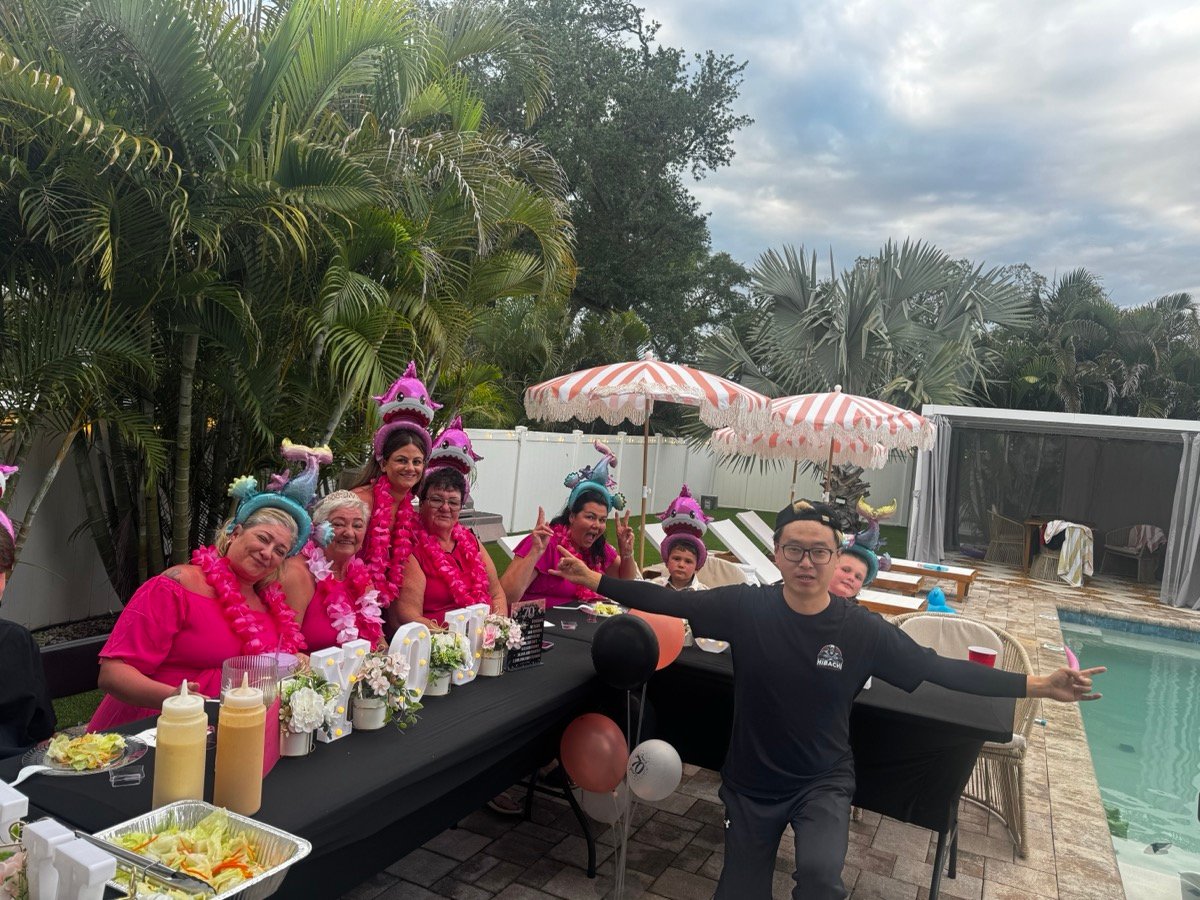
Rumba Hibachi promotes hibachi catering in Duck and across the Outer Banks, including Corolla, Southern Shores, Kitty Hawk, Kill Devil Hills, and Nags Head. Its public-facing information specifically discusses beach-house decks, poolside gatherings, and large vacation-rental groups.
The company lists a base rate of $50 per person, a $500 minimum spend, and a suggested 20% gratuity added to the total bill. These figures should be reconfirmed because seasonal demand, travel distance, premium menu items, and holiday dates can change final pricing.
Core Strengths
– Strong relevance for beach-house and vacation-rental events
– Clearly oriented toward Outer Banks group dining
– Suitable for family reunions, group vacations, and destination celebrations
– Publicly addresses coastal private-event use cases
Buyer Considerations
Coastal events create additional operational risks that buyers often overlook:
– Wind can affect grill setup and flame management
– Sand, decks, and narrow access paths can complicate equipment movement
– Vacation-rental policies may prohibit open-flame cooking in certain areas
– Summer traffic can affect chef arrival windows
– Outdoor service may require a covered contingency space during storms
For Outer Banks bookings, do not assume that “outdoor space” automatically means “approved cooking space.” Confirm exact placement requirements with both the provider and property manager.
Service Comparison Table
| Provider | Primary North Carolina Focus | Typical Event Use | Publicly Stated Pricing / Minimum | Coverage Pattern | Certifications / Permits to Verify |
|---|---|---|---|---|---|
| Hibachi Sake Sake | North Carolina plus FL, GA, and SC service markets | Private dinners, birthdays, corporate events, luxury home dining, backyard catering | Request a tailored quote based on date, location, guest count, and menu | Multi-state Southeast model | Local food-service authorization, insurance, chef food-safety training, event-specific venue approval |
| Hibachi With Us | Statewide-style NC coverage, including major cities and Outer Banks | Private homes, cabins, rentals, family parties | Public page lists $55/adult, $30/child; verify minimums and travel fees | Broad North Carolina coverage claim | Current permits, inspection standing, insurance, food-handler credentials where applicable |
| Awesome Hibachi | Raleigh and Triangle area | Backyards, driveways, local private events | Public page lists $60/adult, $30/child, $600 minimum spend | Raleigh-Durham-Triangle focus | Local operating approval, insurance, food-safety documentation |
| Hibachi Lit / Hibachi Now | North Carolina plus broader Southeast | Homes, patios, Airbnb properties, approved venues | Request quote | Multi-state regional coverage | Event-location approval, mobile-catering documentation, insurance |
| Mobile Hibachi 4U | Winston-Salem and assigned local service area | Private homes, rentals, weddings, corporate events | Request quote | Local eligibility based on ZIP code and availability | Venue authorization, food safety, insurance, equipment safety plan |
| Rumba Hibachi | Duck and Outer Banks | Beach houses, vacation rentals, poolside and family events | Public page lists $50/person, $500 minimum, 20% suggested gratuity; verify current terms | Outer Banks coastal focus | Rental-property approval, propane/open-flame permissions, insurance |
Important: Public pricing, guest minimums, availability, and travel charges can change. Treat online price pages as preliminary information, not a final quote.
What Buyers Should Verify
Food-Safety and Permit Checks
North Carolina food businesses are regulated through state and local health systems, and requirements can vary based on the operating model, county, venue, and whether the event is private or public.
For example, Orange County states that retail food service requires a permit before preparation and sale, while temporary food permits may apply to certain public-event situations. It also notes that mobile food units operating in North Carolina should have a current permit and be in good standing with inspections in their home county.
Buncombe County similarly notes that food-service permits can apply to restaurants, caterers, food trucks, mobile food units, and other food businesses. Its guidance also explains that shared or commissary kitchens may be used by mobile units and temporary operators, but individual businesses still need appropriate authorization.
For events in Greenville and Pitt County, restaurants, food trucks, food stands, mobile food units, temporary food providers, and caterers are regulated through the Pitt County Environmental Health Division.
Questions to Ask Every Provider
Before sending a deposit, ask the service provider:
1. Is your food service or catering operation currently authorized for the county where my event will take place?
2. Can you provide proof of general liability insurance if my venue requires it?
3. How do you transport raw proteins and hold them at safe temperatures before service?
4. How do you prevent cross-contact for shellfish, egg, soy, gluten, sesame, dairy, or nut allergies?
5. What is your bad-weather policy for rain, wind, lightning, extreme heat, or severe cold?
6. What cooking surface, airflow, and clearance do you require?
7. Are propane, fuel, equipment transport, travel, tax, and gratuity included in the quote?
8. Is there a written cancellation, rescheduling, and guest-count policy?
9. Who is the day-of-event contact if the chef is delayed by traffic or a vehicle issue?
10. Can you provide a final invoice showing all included and excluded charges?
Common Buying Mistakes
Choosing Only by Headline Price
A lower advertised price can become expensive once travel, gratuity, premium proteins, tax, holiday charges, rental-property fees, and guest minimums are added.
How to avoid it: Request an all-in event estimate with a line-by-line breakdown.
Ignoring the Cooking Location
A beautiful deck, patio, or pool area may not be safe or authorized for a live hibachi grill. Many rental homes restrict propane use, outdoor cooking, chef access, noise, or vendor parking.
How to avoid it: Send the provider photos of the intended cooking area before booking and obtain written approval from the property owner or venue manager.
Treating Allergies as a Last-Minute Detail
Hibachi cooking often uses shared surfaces, sauces, oils, eggs, soy-based ingredients, shellfish, and sesame. A provider may be able to accommodate preferences but may not be able to guarantee an allergen-free environment.
How to avoid it: Disclose allergies during the initial quote stage, not on the event day. Ask specifically about cross-contact procedures and whether the provider can safely accommodate the requested restriction.
Assuming “Mobile” Means “No Permit Questions”
A mobile chef or caterer may still need to comply with local operating rules, and public events often trigger different requirements from private residential events.
How to avoid it: For commercial properties, festivals, community spaces, or ticketed events, contact the relevant county or local environmental-health authority early in the planning process. Orange County’s guidance, for example, distinguishes temporary food establishments and permitted mobile food units.
Booking Without a Weather Plan
Hibachi grilling is a live-fire, live-cooking format. Rain, wind, lightning, and extreme conditions can affect timing, equipment placement, guest comfort, and safety.
How to avoid it: Confirm whether the provider can use a covered outdoor area, what types of canopy are acceptable, and when a weather cancellation decision must be made.
The Less-Discussed Insider Tip
The most overlooked risk is usually not the menu—it is the service lane.
A mobile hibachi event needs a practical path from vehicle to cooking area. Before booking, buyers should check:
– Distance from parking to the cooking area
– Stairs, gates, narrow hallways, gravel paths, and elevators
– Whether equipment can roll safely through the property
– Whether the chef must cross indoor living areas with food and gear
– Whether the venue restricts vendor parking or loading times
– Whether the event location has sufficient lighting after sunset
A service provider may technically cover your ZIP code but still face operational difficulty if the property requires a long carry over sand, stairs, wet grass, steep driveways, or crowded resort walkways.
The better question is not, “Do you serve my city?” It is:
> “Can your team safely load in, set up, cook, and leave from this exact property under the planned event conditions?”
This single question can prevent late arrival, setup delays, unsafe placement, and last-minute venue disputes.
Buyer’s Guide for Corporate Events
Corporate events require a more formal procurement process than a casual birthday dinner. If you are booking a hibachi provider for employee appreciation, a client event, a sales meeting, or a team celebration, request the following before approval:
| Procurement Item | Why It Matters |
|---|---|
| W-9 or vendor registration details | Often required for company payment processing |
| Certificate of insurance | Commonly required by offices, hotels, and event venues |
| Detailed written proposal | Clarifies food, labor, equipment, travel, service time, and taxes |
| Dietary and allergen plan | Protects guests and helps event planners communicate responsibly |
| Staffing plan | Confirms chef count, grill count, and service flow for larger groups |
| Setup timeline | Coordinates building access, loading docks, security, and guest arrival |
| Cancellation terms | Limits financial risk if the event is postponed |
| Invoice and payment schedule | Supports internal purchase-order and accounting procedures |
For corporate buyers, a provider’s communication process is often as important as the menu. A vendor that can quickly provide complete documentation, clarify logistics, and respond to venue questions is more likely to perform smoothly on event day.
FAQ
1. How can I confirm whether a hibachi service has valid permits?
Ask the provider which county or jurisdiction covers its operation and request the relevant permit or current operating documentation. For larger, public, ticketed, or commercial events, contact the county environmental-health office directly to confirm local requirements. Orange County notes that permitted mobile food units should have current permits and good inspection standing in their home county.
2. Are private-home hibachi events subject to the same requirements as public festivals?
Not always. Requirements can differ based on whether food is sold, whether the event is ticketed, whether the event is public, whether the provider is operating as a caterer or mobile unit, and which county has jurisdiction. Public events generally create more compliance questions than a private residential gathering. Confirm the specific case with the local environmental-health authority.
3. What guest count is most economical for a mobile hibachi service?
The answer depends on the provider’s minimum spend, travel fee, chef capacity, and menu. A provider with a $500 or $600 event minimum may be more cost-effective for medium or large groups than for a six-person dinner. Compare the total invoice, not just the advertised per-person price. Awesome Hibachi publicly lists a $600 minimum spend, while Rumba Hibachi publicly lists a $500 minimum spend; both should be reconfirmed before booking.
4. Can a mobile hibachi provider safely accommodate severe food allergies?
Some providers can adapt menu selections, separate ingredients, or use alternative sauces, but a shared grill environment may make a completely allergen-free guarantee difficult. Disclose the allergy early and ask whether the provider can manage cross-contact risk. If the allergy is severe or life-threatening, consult the guest’s medical guidance and do not rely on vague verbal assurances.
5. What should a written quote include?
A complete quote should show the event date, address or ZIP code, guest count, menu, premium proteins, child pricing, minimum spend, travel fee, taxes, gratuity, equipment, setup time, cleanup responsibility, weather terms, deposit, cancellation policy, and final-payment deadline. If any element is unclear, ask for it in writing before paying.
References
– [National Restaurant Association: 2026 State of the Restaurant Industry] — industry outlook covering sales, workforce, operating costs, and consumer demand. [restaurant]
– [National Restaurant Association: Restaurant Industry Sales Data] — ongoing U.S. restaurant and eating-place sales indicators. [restaurant]
– [Orange County, North Carolina: Food Service Forms and Applications] — information on food service, temporary food establishments, and mobile food units. [orangecountync]
– [Buncombe County: Starting a Food Business Guide] — guidance covering food service permits, mobile units, caterers, and commissary kitchens. [buncombenc]
– [City of Greenville, North Carolina: Licenses and Permits] — local overview of food-service and mobile-food regulation through Pitt County Environmental Health. [greenvillenc]
Hot Tags: Top Hibachi Service In North Carolina, Hibachi Service, Mobile Hibachi Catering, Private Hibachi Chef, Hibachi Catering North Carolina, Backyard Hibachi Party, At-Home Hibachi Catering, Corporate Hibachi Catering, Private Chef Catering, Outdoor Hibachi Catering