
Content Menu
● Why Smoke Management Matters for Mobile Hibachi Catering
● Indoor vs. Outdoor Hibachi Logistics
>> The Indoor Reality: Ventilation Is the Deciding Factor
>> Indoor Events Can Work When Conditions Are Right
● Why Outdoor Mobile Hibachi Is Usually the Better Choice
>> A Better Backyard Hibachi Layout
● Smoke Control Starts Before the Chef Arrives
>> The Pre-Event Smoke Assessment
● Equipment, Fuel, and Operational Discipline
● State and Venue Compliance Considerations
● Host Checklist for an Outdoor Hibachi Party
● Create a Better Hibachi Experience
● FAQ
>> Can mobile hibachi catering be done indoors?
>> Is outdoor hibachi catering safe for a backyard party?
>> How far should a hibachi grill be from a tent?
>> Will hibachi cooking create a lot of smoke?
>> What happens if it rains during an outdoor hibachi party?
>> Do I need a permit for a private hibachi party at home?
>> Can the grill be placed close to a house or open patio door?
Smoke management is one of the most important planning factors in mobile hibachi catering. For private events, the decision between an indoor hibachi-style experience and an outdoor mobile hibachi setup affects guest comfort, venue approval, safety procedures, staffing, cleanup, equipment selection, and the overall atmosphere.
For Hibachi Sake Sake, serving private parties across Florida, Georgia, South Carolina, and North Carolina, the strongest starting point is simple: live mobile hibachi cooking is usually best planned outdoors. A backyard, patio, poolside area, private driveway, or open-air event space gives the chef room to manage heat, cooking vapor, food flow, and guest seating without placing a home’s ventilation system under unnecessary pressure.
Why Smoke Management Matters for Mobile Hibachi Catering
A private hibachi chef experience is interactive by design. Guests gather around a flat-top grill while the chef cooks proteins, vegetables, fried rice, and noodles in real time. That theatre is part of the value—but it also creates heat, steam, cooking odors, and grease-laden vapor.
“Smoke” is often used as a catch-all term. In practice, a mobile hibachi team must manage several different outputs:
– Visible smoke created when oil, marinades, food particles, or grease contact high heat
– Steam from vegetables, rice, sauces, and water-based ingredients
– Heat radiating from the grill and cooking surface
– Food aromas that may linger in enclosed spaces
– Grease vapor that may accumulate on nearby surfaces
– Fuel-related emissions, depending on the equipment and fuel source used
The operational question is not only whether guests can see smoke. It is whether the event environment can safely and comfortably handle the cooking process from setup through cooldown and cleanup.
For hosts planning birthday parties, graduation celebrations, holiday gatherings, family reunions, corporate events, or luxury private dinners, the right setting protects the experience. It lets guests focus on the chef’s performance rather than worrying about alarms, lingering odor, or an overheated room.
Indoor vs. Outdoor Hibachi Logistics
| Planning area | Indoor hibachi-style event | Outdoor mobile hibachi catering |
|---|---|---|
| Ventilation | Requires professional commercial-grade exhaust capacity | Uses natural airflow, with placement adjusted for wind and guest comfort |
| Smoke and odor control | Higher risk of lingering odor and surface residue | Easier to direct cooking activity away from doors, windows, and seating |
| Guest comfort | Can become warm, crowded, and noisy | More room for seating, circulation, and a theatrical chef setup |
| Venue suitability | Limited to properly equipped commercial kitchens or approved venues | Suitable for many private backyards, patios, driveways, and open-air venues |
| Fire safety planning | Must align with the venue’s existing cooking and suppression systems | Requires clear spacing, stable surfaces, extinguishers, and local site review |
| Cleanup | Greater concern for interior surfaces and odor retention | Simplified cleanup when the cooking zone is well planned |
| Weather exposure | Protected from rain and wind | Requires a weather backup plan and secure equipment placement |
| Best fit | Approved commercial spaces with designed kitchen ventilation | Most at-home hibachi parties and private outdoor events |
The Indoor Reality: Ventilation Is the Deciding Factor
An indoor private hibachi event should never be treated as “outdoor cooking brought inside.” Indoor live cooking requires a venue that is built and approved for it. In practical terms, that means appropriate commercial ventilation, grease-vapor capture, fire protection systems, sufficient clearances, and permission from the property owner or venue operator.
Cooking equipment that produces smoke or grease-laden vapor typically requires an exhaust system designed for commercial cooking conditions. Industry fire-safety guidance identifies NFPA 96 as a central standard for ventilation control and fire protection in commercial cooking operations.
A residential kitchen hood, open windows, ceiling fan, or household range fan is not a substitute for a properly engineered commercial exhaust system. Even if a room initially appears airy, vapor and odor can migrate into fabrics, HVAC returns, adjacent rooms, and upper floors.
For a genuine indoor experience, the best option is usually an established venue with a permitted demonstration kitchen, commercial kitchen, restaurant private room, or event facility that has confirmed compatibility with the cooking method and the caterer’s equipment.
Indoor Events Can Work When Conditions Are Right
Indoor hibachi-style catering can be successful, but only under controlled conditions. It is most appropriate when a venue has all of the following:
1. Commercial-grade ventilation directly designed to capture cooking emissions.
2. A confirmed fire-protection plan compatible with the cooking equipment.
3. Written approval from the venue, property manager, or event coordinator.
4. A sufficient cooking zone that keeps guests, exits, and combustible décor clear.
5. A site-specific plan for equipment access, food service, cleanup, and waste removal.
A luxury private dinner in a hotel suite with a commercial demonstration kitchen is fundamentally different from trying to operate a live grill in a condominium living room. The experience may look similar in photos, but the logistical requirements are not comparable.
Why Outdoor Mobile Hibachi Is Usually the Better Choice
For most home events, outdoor mobile hibachi catering provides the best balance of safety, visual impact, and guest comfort. The chef can create a full hibachi performance without relying on a building’s interior ventilation system.
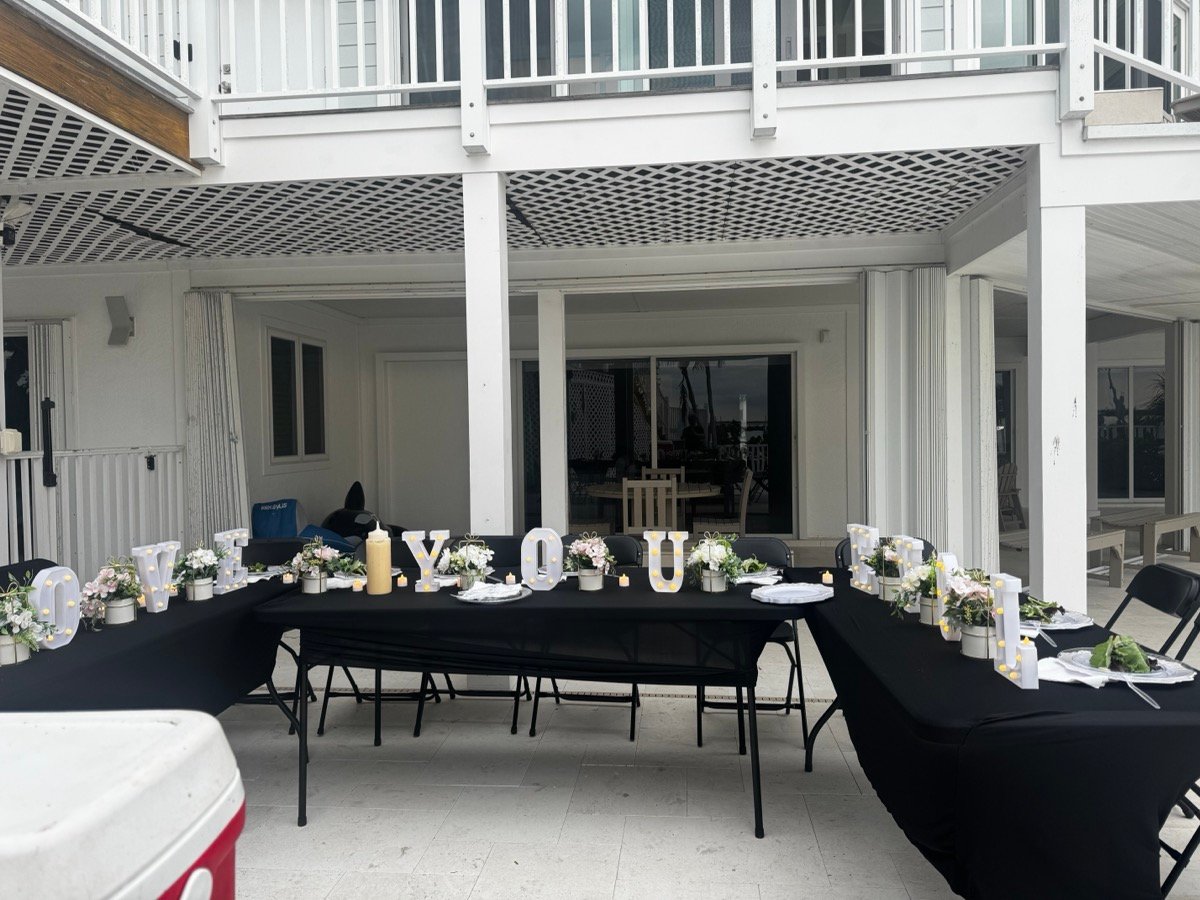
An outdoor environment also allows the catering team to create a defined operational zone. The grill can be placed on a stable, level surface, positioned away from doors and windows, and arranged so the chef can work safely while guests have clear seating and walking paths.
Outdoor does not mean unplanned. A professional setup still needs a site review and a deliberate layout.
A Better Backyard Hibachi Layout
A strong outdoor plan normally includes:
– A flat, stable, non-slip surface for the grill station
– Adequate access for transporting equipment from the vehicle
– Enough clearance around the chef’s work area
– Seating positioned for visibility without crowding the cooking zone
– A path that lets guests move without crossing behind the chef
– Distance from dry landscaping, decorative fabrics, pool toys, and other combustible items
– Grill placement away from doors, open windows, air intakes, and HVAC equipment
– A lighting plan for evening events
– A weather contingency for rain, strong wind, lightning, or extreme heat
For tented events, location matters even more. South Carolina’s adopted fire-code provisions state that cooking devices producing sparks, grease-laden vapors, or embers should not be used within 20 feet of a tent or temporary structure. The same provisions call for noncombustible surfaces and appropriate portable fire extinguishers for cooking equipment using combustible oils or solids.
That principle is useful well beyond one state: do not place a live cooking station under a low canopy, beside a fabric wall, or in a cramped decorative tent simply because it looks convenient.
Smoke Control Starts Before the Chef Arrives
The most effective smoke management happens during event planning, not when guests are already seated. A caterer and host should confirm the space before finalizing the setup.
The Pre-Event Smoke Assessment
A practical site review should address five questions:
| Question | Why it matters |
|---|---|
| Where will the grill sit? | The surface must be stable, clear, and suitable for hot equipment |
| Which direction does the wind usually travel? | Wind can move vapor toward guests, doors, windows, or neighboring properties |
| What is above and beside the grill? | Low ceilings, umbrellas, trees, awnings, and tents can create risk |
| How will equipment reach the cooking area? | Long stairways, narrow gates, and uneven ground affect safe setup |
| What is the weather backup? | Rain, high winds, and heat can change the event plan quickly |
For example, a host may initially choose a covered patio because it offers shade. During a site review, the team may find that the patio ceiling is low, the grill would sit close to a sliding glass door, and the prevailing wind would push cooking vapor directly into the home. A better solution could be a nearby open driveway or pool deck with a separate shaded dining area.
That adjustment can improve comfort without compromising the celebration.
Equipment, Fuel, and Operational Discipline
Reliable smoke control depends on equipment quality and chef technique. A mobile hibachi team should use maintained equipment, clean cooking surfaces, appropriate fuel systems, and a menu workflow that limits unnecessary flare-ups and heavy smoke.
The chef’s habits matter as much as the grill itself. Proper oil control, temperature management, ingredient sequencing, and cleaning between courses help keep the cooking surface performing consistently.
Key operating practices include:
– Preheating the grill gradually and monitoring heat zones
– Using measured amounts of oil rather than over-oiling the surface
– Keeping excess marinade and food debris off high-heat areas
– Cooking in an order that supports clean transitions between proteins and vegetables
– Maintaining clear access to fire-safety equipment
– Keeping guest seating outside the active working perimeter
– Managing used oil, food waste, and hot equipment safely after service
A polished hibachi experience should feel effortless to guests. Behind that experience is a disciplined setup process, active supervision, and a teardown plan that continues after the final plate is served.
State and Venue Compliance Considerations
Rules can vary by city, county, venue, event type, and whether food is sold to the public. Private catered events and public festivals may be treated differently, so hosts should not assume one approval process applies everywhere.
In Georgia, food-service rules state that mobile, temporary, catering, and other food-service operations need a valid permit before operating, and they address immediate outdoor cooking when food is cooked and served promptly in an outside area of a permitted food-service operation.
In North Carolina, local health departments commonly require temporary food establishment permits for vendors serving food at festivals and special events; some counties request applications at least 15 days before the event.
South Carolina distinguishes mobile operations by their level of food preparation. Mobile setups that cook food and produce grease-laden vapors face more demanding requirements than vendors that simply serve prepared food. Florida also regulates mobile food establishments through the Department of Business and Professional Regulation, with standards covering the mobile unit and protection from environmental exposure.
For a private home celebration, the Hibachi Sake Sake team should still verify access, property rules, neighborhood considerations, local restrictions, and venue requirements before confirming the final setup. Local approval always overrides a generic checklist.
Host Checklist for an Outdoor Hibachi Party
Before booking your private hibachi chef, prepare these details:
1. Share the event address, guest count, date, and preferred serving time.
2. Send photos or a short video of the proposed cooking area.
3. Identify gates, stairs, narrow walkways, pools, patios, decks, and parking limitations.
4. Confirm whether the event is at a private residence, rental property, clubhouse, venue, or community space.
5. Tell the catering team about low awnings, trees, overhead décor, tents, or nearby windows.
6. Ask guests to keep pets and young children away from the active grill area.
7. Plan a rain and wind contingency before invitations go out.
8. Check venue rules early if the event involves a condominium, HOA, hotel, resort, beach area, or public space.
This information lets the catering team recommend the safest and most enjoyable layout before event day.
Create a Better Hibachi Experience
For most celebrations in Florida, Georgia, South Carolina, and North Carolina, outdoor mobile hibachi catering gives guests the full chef-led experience with stronger smoke control, better airflow, and more flexible event logistics.
Hibachi Sake Sake can help you plan the right setup for a birthday, graduation party, family gathering, holiday dinner, company event, or upscale private celebration. Share your event location, guest count, and outdoor space details to start planning a mobile hibachi experience built around your home and your guests.
FAQ
Can mobile hibachi catering be done indoors?
It may be possible only in an approved venue with suitable commercial ventilation, fire protection, adequate clearances, and explicit permission for the equipment and cooking method. Most residential indoor spaces are not appropriate for live mobile hibachi cooking.
Is outdoor hibachi catering safe for a backyard party?
It can be safe when the grill is placed on a stable surface, kept clear of structures and combustible materials, operated by trained professionals, and supported by a site-specific plan. The host should disclose all space limitations before the event.
How far should a hibachi grill be from a tent?
Do not assume a grill can safely operate next to or under a tent. South Carolina fire-code provisions require cooking devices that produce grease-laden vapors, sparks, or embers to be at least 20 feet from tents or temporary structures. Local officials and venue requirements may impose additional rules.
Will hibachi cooking create a lot of smoke?
A well-managed hibachi setup should produce normal cooking vapor, aroma, and occasional visible smoke rather than uncontrolled heavy smoke. Oil quantity, marinades, grill temperature, wind direction, menu selection, and equipment maintenance all affect the result.
What happens if it rains during an outdoor hibachi party?
A weather plan should be agreed before the event. Depending on conditions and available space, the team may adjust timing, reposition the setup to an approved protected outdoor area, or discuss another safe option. Live cooking should not continue in unsafe weather or beneath an unsuitable enclosed structure.
Do I need a permit for a private hibachi party at home?
Requirements depend on the state, city, county, venue, whether food is sold, and the type of event. A private catered home event may be handled differently from a public festival or ticketed event. Confirm local requirements and share the venue details with the catering provider early.
Can the grill be placed close to a house or open patio door?
It is better to locate the grill away from doors, windows, vents, and air intakes so vapor and odors do not enter the building. Outdoor cooking equipment should also remain clear of combustible materials and guest traffic.
References
– [U.S. Consumer Product Safety Commission — CPSC Warns: Never Use Charcoal Grills Indoors]
– [Centers for Disease Control and Prevention — Carbon Monoxide Poisoning Basics]
– [National Fire Protection Association — Keeping Food Trucks Safer from Fires and Explosions]
– [Florida Department of Business and Professional Regulation — Guide to Mobile Food Establishments]
– [Georgia Rules and Regulations — Food Service, Chapter 511-6-1]
– [City of Charleston — Mobile Food Vendors and Food Trucks]
– [South Carolina Department of Agriculture — Regulation 61-25, Retail Food Establishments]
– [Cherokee County, North Carolina — Temporary Food Service Permit]
– [South Carolina Fire Code, Chapter 31 — Tents and Temporary Structures]
Hot Tags: Mobile Hibachi Catering, Private Hibachi Chef, Hibachi Catering Services, Outdoor Hibachi Catering, Backyard Hibachi Party, Hibachi At Home, Private Chef Catering, Corporate Event Catering, Mobile Teppanyaki Catering, Outdoor Catering Services