
Content Menu
● What Is Private Hibachi Chef Liability?
>> Common liability risks at a backyard hibachi party
● Why Insurance Matters to the Party Host
>> The host’s practical advantages
● General Liability vs. Other Coverage Types
● Mobile Hibachi Creates Different Risks Than Restaurant Dining
>> Restaurant environment versus private-property setup
● Food Safety Is Part of Liability Prevention
>> Food safety practices guests should expect
● A Host’s Checklist Before Booking a Private Hibachi Chef
>> Questions to ask your hibachi provider
>> Example: a safer birthday-party setup
● Why a Certificate of Insurance Can Be Useful
● State and Local Requirements Can Differ
● Insurance Signals Professional Standards
● Book a Backyard Hibachi Experience With Confidence
>> Does a private hibachi chef need liability insurance?
>> Does homeowners insurance cover a backyard hibachi party?
>> Should I ask a mobile hibachi company for a Certificate of Insurance?
>> Can a private hibachi chef cook on a deck or near a pool?
>> What should I tell my private hibachi chef before the event?
>> Is liquor liability needed for a hibachi event?
>> How early should I book a private hibachi chef?
A private hibachi chef can turn a backyard birthday, family reunion, graduation party, holiday celebration, or corporate gathering into a memorable live-dining experience. But when a chef brings high-heat grills, raw ingredients, knives, propane equipment, and an interactive cooking show onto private property, liability protection matters just as much as food, entertainment, and guest comfort.
For hosts planning an at-home hibachi party in Florida, Georgia, South Carolina, or North Carolina, choosing an insured mobile hibachi provider helps protect everyone involved. It signals that the provider treats food safety, property care, guest well-being, and professional operations as core parts of the service—not optional extras.
What Is Private Hibachi Chef Liability?
Private hibachi chef liability refers to the legal and financial responsibility connected with injuries, property damage, food-related claims, or other incidents that may occur during a mobile hibachi event.
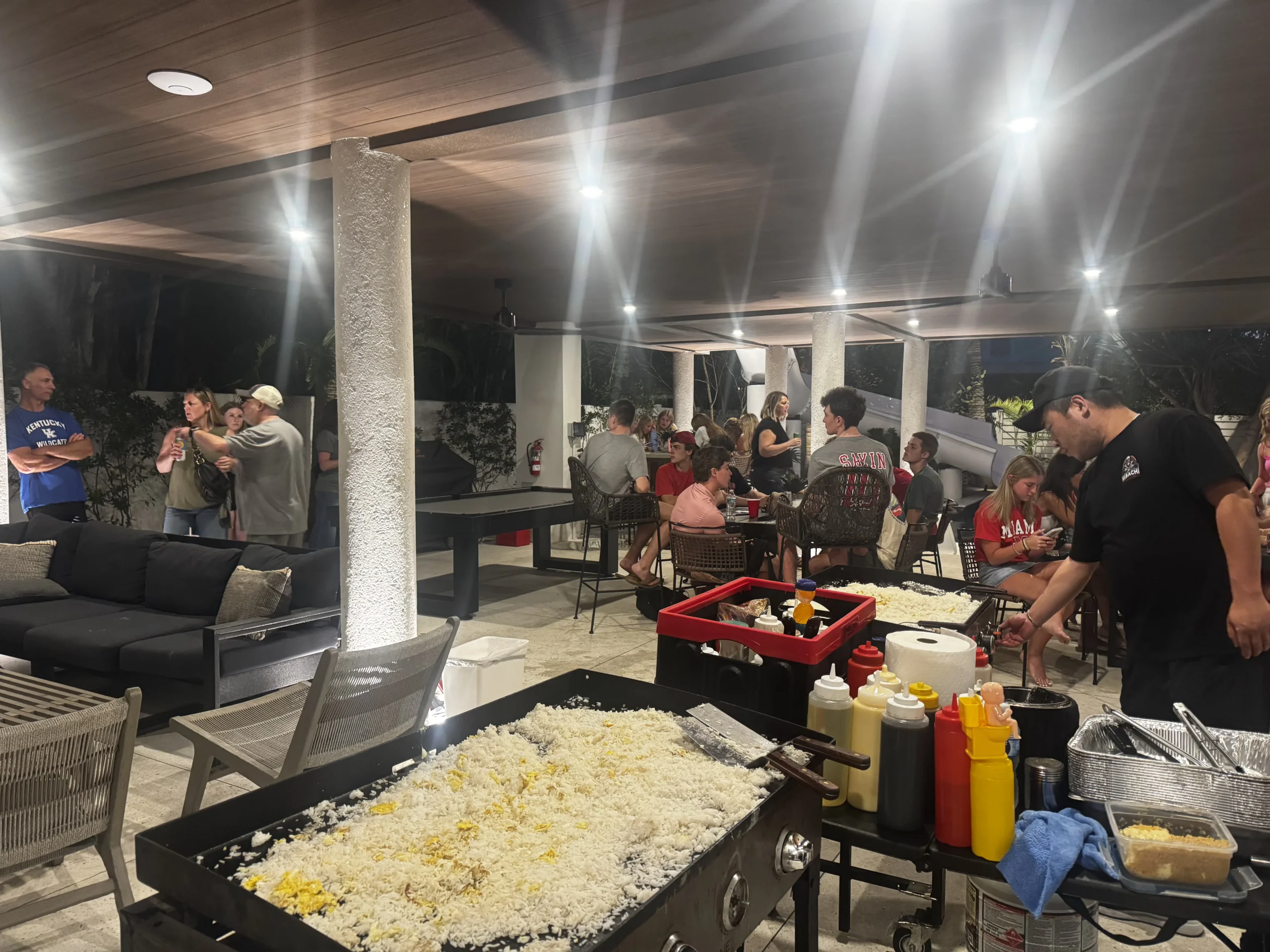
Unlike dining at a brick-and-mortar restaurant, an at-home hibachi experience takes place in a changing environment. Every event location has different access points, patios, decks, driveways, guest counts, weather conditions, electrical access, pets, children, pool areas, and outdoor surfaces.
A professional mobile hibachi service needs to prepare for these variables before the chef begins cooking.
Common liability risks at a backyard hibachi party
Potential risks can include:
– A guest slipping near the cooking or beverage area
– A child getting too close to a hot grill
– Smoke, heat, grease, or equipment causing property damage
– A food allergy or cross-contact concern
– A guest alleging foodborne illness after an event
– Damage to a patio, lawn, deck, table, driveway, or outdoor furniture
– An employee injury while transporting or setting up equipment
– A vehicle-related accident while traveling to the event
Insurance does not eliminate risk. It provides a financial protection structure if a covered claim occurs. It can help with legal defense costs, settlements, medical expenses, or repairs, depending on the policy terms and the specific situation.
Why Insurance Matters to the Party Host
Many hosts assume their homeowners insurance will fully handle an accident at a private party. That assumption can create unnecessary exposure.
Homeowners policies vary widely. Coverage may be limited when an incident involves a commercial vendor, open flame, a food-service operation, alcohol, rented equipment, or a large gathering. A host should never rely on assumptions about what a personal policy covers.
Hiring an insured private hibachi chef adds another layer of protection to the event.
The host’s practical advantages
An insured provider can offer more than a great dinner. The provider may also demonstrate that it has considered operational risks before arriving at your property.
For the host, that can mean:
– More confidence when inviting children, older relatives, coworkers, and neighbors
– A clearer process for setup location and guest seating
– Better communication about food allergies and dietary needs
– A more professional response if an unexpected issue occurs
– Documentation such as a Certificate of Insurance when appropriate
– Reduced uncertainty around vendor-related accidents
For a luxury private dinner or corporate event, asking about insurance is not impolite. It is a reasonable part of vendor selection.
General Liability vs. Other Coverage Types
General liability insurance is often the foundation for a mobile hibachi chef or catering operation. It commonly addresses third-party bodily injury and property-damage claims arising from business operations, subject to policy conditions and exclusions.
However, general liability is not the only coverage a serious operator may need.
| Coverage type | What it may help address | Backyard hibachi example |
|---|---|---|
| General liability | Guest injuries or third-party property damage | A guest slips near the cooking area or equipment damages a patio surface |
| Product liability | Claims connected with food sold or served | A guest alleges illness after consuming a meal |
| Commercial auto | Business-use vehicle accidents | A service vehicle is involved in a collision while traveling to an event |
| Hired and non-owned auto | Vehicle exposure involving rented or employee-owned vehicles | A team member uses a personal vehicle to transport supplies |
| Workers’ compensation | Work-related employee injuries | A staff member is injured during grill setup or equipment loading |
| Liquor liability | Alcohol-related claims when alcohol is sold, served, or provided by the business | A vendor-provided drink service contributes to a claim |
| Commercial umbrella | Additional limits above underlying policies | A severe injury claim exceeds the base liability limit |
Coverage is never one-size-fits-all. Limits, deductibles, exclusions, additional-insured status, employee classifications, cooking methods, alcohol service, and equipment details can all affect protection.
For example, if a hibachi company provides alcohol or bartending as part of a package, ordinary general liability may not be sufficient. Alcohol-related exposure can require separate liquor liability coverage.
Mobile Hibachi Creates Different Risks Than Restaurant Dining
A restaurant controls its floors, ventilation, kitchen layout, equipment storage, staffing, fire systems, and guest flow. A mobile hibachi chef must create a safe service environment at a client’s home, rental property, event venue, or office location.
That difference matters.
Restaurant environment versus private-property setup
| Operational area | Restaurant setting | Mobile hibachi setting |
|---|---|---|
| Cooking area | Fixed kitchen or designed dining space | Patio, driveway, backyard, deck, or rented venue |
| Safety controls | Permanent systems and established layout | Temporary setup shaped by the host property |
| Equipment transport | Minimal daily relocation | Equipment moves between events and locations |
| Guest distance | Defined tables and aisles | Informal seating, children, pets, and changing foot traffic |
| Weather exposure | Mostly indoors | Rain, wind, heat, wet ground, and uneven surfaces |
| Site inspection | Known premises | New site conditions for each booking |
| Fire considerations | Built-in compliance systems | Requires location-specific planning and equipment checks |
A responsible mobile hibachi team evaluates the space before cooking begins. The goal is not to make the event feel restrictive. The goal is to create enough structure for guests to enjoy the show safely.
At Hibachi Sake Sake, a thoughtful setup process should include confirming the cooking surface, keeping guests at an appropriate distance, identifying safe access routes, and discussing special conditions before the chef arrives.
Food Safety Is Part of Liability Prevention
Food safety affects both guest confidence and operational responsibility. Private chefs work with proteins, produce, sauces, rice, seafood, eggs, and other ingredients that require proper sourcing, storage, handling, cooking, and service.
The Centers for Disease Control and Prevention estimates that 48 million people in the United States get sick from foodborne diseases each year. That does not mean every food-related illness can be traced to a catered event, but it shows why disciplined food handling is essential for any professional food-service operation.
Food safety practices guests should expect
A professional private hibachi service should have a consistent approach to:
– Transporting perishable food at safe temperatures
– Separating raw proteins from ready-to-eat foods
– Cleaning and sanitizing food-contact surfaces
– Using safe cooking temperatures
– Managing ingredient substitutions and allergy requests
– Preventing cross-contact when possible
– Training staff in safe food handling
– Communicating clearly about menu ingredients
Allergy planning deserves special attention. A guest’s allergy information should be collected before the event whenever possible. The host should share known allergies, dietary restrictions, and ingredient concerns early—not while the chef is already cooking.
No outdoor food-service environment can promise a completely allergen-free setting unless the provider has specifically designed and documented such a process. Clear communication is safer than broad promises.
A Host’s Checklist Before Booking a Private Hibachi Chef
Insurance is important, but it should be one part of a complete booking conversation. Ask direct questions before you pay a deposit or finalize your guest list.
Questions to ask your hibachi provider
1. Do you carry current general liability insurance for mobile food-service events?
2. Can you provide a Certificate of Insurance if my venue, homeowners association, or corporate event planner requests one?
3. What type of grill and fuel source do you use?
4. What space, surface, and access requirements do you need?
5. Can you safely operate on my deck, patio, grass, driveway, or poolside area?
6. How do you handle rain, strong wind, or severe weather?
7. How do you collect and manage food allergy information?
8. What ingredients are included in the menu, sauces, and seasonings?
9. Does your team handle alcohol, or should the host arrange beverages separately?
10. What safety expectations should I share with guests before the event?
These questions help avoid last-minute surprises. They also show the provider that the host values a well-managed event.
Example: a safer birthday-party setup
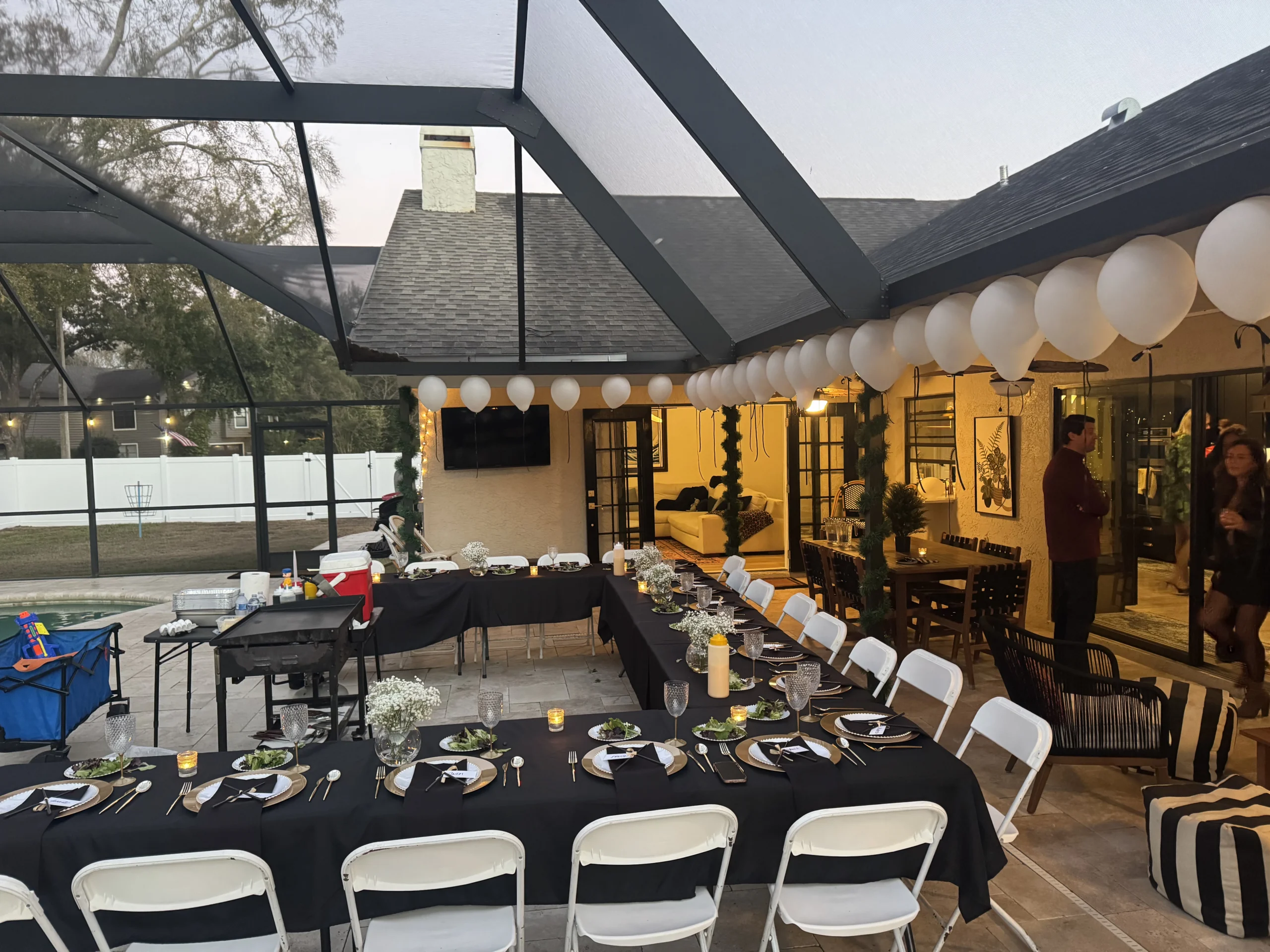
Imagine a host in Jacksonville planning a 30-person birthday celebration. The backyard has a pool, outdoor furniture, children attending, and a narrow gate leading to the patio.
A prepared mobile hibachi provider would confirm the access path in advance, select a stable cooking location away from the pool edge, preserve a clear guest walkway, keep children away from the hot grill, and discuss weather backup plans. The host would provide allergy details before the event and make sure the seating arrangement does not crowd the cooking area.
This preparation takes only a few conversations. Yet it can significantly improve comfort, flow, and safety.
Why a Certificate of Insurance Can Be Useful
A Certificate of Insurance, often called a COI, is a document that summarizes certain insurance details, such as the policyholder, insurer, coverage types, policy dates, and limits.
It is often requested by:
– Wedding venues
– Corporate offices
– Apartment communities
– Homeowners associations
– Vacation rental managers
– Country clubs
– Event planners
– Property managers
A COI is not the insurance policy itself, and it does not automatically expand coverage. Still, it gives the host or venue evidence that the vendor has active insurance at the time the certificate is issued.
For larger gatherings, luxury dinners, corporate events, or venue-based celebrations, asking whether a provider can supply a COI can be a practical screening step.
State and Local Requirements Can Differ
Florida, Georgia, South Carolina, and North Carolina each have different state and local rules for food businesses, permitting, taxes, health oversight, alcohol service, fire safety, and employment obligations.
The details may also vary by county, city, venue type, and the specific way food is prepared and transported. For example, a service operating from a permitted commercial kitchen may face different expectations from a business preparing food under a limited home-food framework.
Do not treat a single rule as universal. A professional provider should understand the requirements that apply to its business model and service area. Hosts should also check venue rules, local ordinances, HOA requirements, and rental-property conditions before scheduling an outdoor cooking event.
For Florida businesses, workers’ compensation requirements can apply once a non-construction business reaches four or more employees, including full-time or part-time workers. The correct coverage structure should be reviewed with a qualified insurance professional and legal advisor.
Insurance Signals Professional Standards
Insurance alone does not prove that a private chef is excellent. A policy cannot replace culinary skill, sanitation, hospitality, training, or good judgment.
But a provider that maintains appropriate coverage is more likely to recognize that mobile food service is a professional responsibility. The best private hibachi experience balances fun with preparation.
Look for a provider that demonstrates:
– Clear booking terms and cancellation policies
– Detailed menu and pricing information
– Responsive allergy and dietary communication
– Transparent setup requirements
– Clean, organized equipment
– Experienced chefs and trained staff
– Current business documentation when relevant
– Respect for your home, venue, guests, and schedule
That combination is especially valuable for celebrations where you want to be present with your guests instead of managing vendor logistics.
Book a Backyard Hibachi Experience With Confidence
A live hibachi dinner should feel exciting, personal, and effortless for the host. The best events are built on great food, engaging chefs, clear communication, thoughtful planning, and responsible operations.
Hibachi Sake Sake brings private and mobile Japanese hibachi experiences to homes, backyards, vacation rentals, corporate gatherings, holiday parties, graduation celebrations, family events, and luxury private dinners across Florida, Georgia, South Carolina, and North Carolina.
Ready to plan your event? Contact Hibachi Sake Sake with your date, city, guest count, preferred menu, and event location. Our team can help you review setup needs, dietary requests, service details, and the best format for a memorable at-home hibachi party.
Frequently Asked Questions
Does a private hibachi chef need liability insurance?
A professional mobile hibachi chef should carry insurance appropriate to their operations. General liability is commonly used to help address third-party injury and property-damage claims. The exact coverage needed depends on the business model, staff, vehicles, alcohol service, equipment, and local requirements.
Does homeowners insurance cover a backyard hibachi party?
It may provide some protection, but coverage varies by policy and event circumstances. Commercial food service, open-flame cooking, alcohol, property damage, or larger gatherings can create limitations. Review your policy with your insurance agent rather than making assumptions.
Should I ask a mobile hibachi company for a Certificate of Insurance?
Yes, especially for corporate events, venues, rental homes, HOA-regulated properties, large parties, or luxury private dinners. Ask in advance so the provider has adequate time to respond to your request.
Can a private hibachi chef cook on a deck or near a pool?
It depends on the equipment, surface, local rules, site conditions, access, weather, and the provider’s safety procedures. Share photos and measurements of the intended area before booking, and follow the provider’s placement guidance on the event day.
What should I tell my private hibachi chef before the event?
Share the event address, guest count, parking and access details, available outdoor space, dietary restrictions, known allergies, children or pets attending, alcohol plans, and any venue rules. This helps the chef prepare the menu, equipment, and setup plan.
Is liquor liability needed for a hibachi event?
It may be relevant if the food-service provider sells, serves, or furnishes alcohol. If the host independently provides beverages, responsibilities can differ. Discuss the arrangement with the provider and consult an insurance professional when alcohol is part of the event.
How early should I book a private hibachi chef?
For weekends, holidays, graduation season, and popular celebration dates, booking several weeks in advance is advisable. Earlier booking gives you more date flexibility and more time to coordinate guest counts, menus, site requirements, and special requests.
References
– [Centers for Disease Control and Prevention — Food Safety]
– [The Hartford — Private Chef Insurance]
– [U.S. Small Business Administration — Choose Business Insurance]
– [Florida Division of Workers’ Compensation — Employer Coverage Requirements]
– [Florida Department of Business and Professional Regulation — Division of Hotels and Restaurants]
– [Georgia Department of Public Health — Environmental Health]
– [South Carolina Department of Public Health — Food Safety]
– [North Carolina Department of Health and Human Services — Food Protection Program]
Hot Tags: Private Hibachi Chef, Hibachi Catering, Mobile Hibachi Catering, Hibachi At Home, Backyard Hibachi Party, Private Chef Insurance, General Liability Insurance, Event Catering Insurance, Corporate Hibachi Catering, Outdoor Catering Services