
Content Menu
● The Core Difference: Usable Event Space Matters More Than Square Footage
● Small Balcony Hibachi: When an Intimate Setup Can Work
>> Balcony Events Need More Than Open Air
>> The Ideal Small Balcony Guest Count
>> Small Balcony Hibachi Layout Example
● Large Yard Hibachi Grill Catering: Built for a Full Celebration
>> Why Large Yards Improve the Hibachi Experience
>> A Large Yard Does Not Mean “No Planning Needed”
● Space Planning Starts With the Chef’s Work Area
>> A Practical Site-Check Checklist
● Balcony vs. Yard: Safety, Access, and Comfort Comparison
● The Hidden Factor: Access Routes Can Decide the Event
● How Guest Count Changes the Best Choice
>> Choose a Small Balcony Format When
>> Choose Large Yard Hibachi Catering When
● Expert Planning Insight: Design for Flow, Not Maximum Capacity
● Regional Considerations for Southern Outdoor Events
>> Florida
>> Georgia
● Questions to Ask Before Booking Hibachi Catering
● Make Your Space Work for the Celebration
● FAQ
>> 1. Can hibachi catering be set up on a small balcony?
>> 2. How much yard space do I need for hibachi grill catering?
>> 3. Is a backyard better than a balcony for a hibachi birthday party?
>> 4. Can guests sit close to the hibachi grill?
>> 5. What should I send a hibachi catering company before the event?
>> 6. Can I host a hibachi party in a rental home or vacation property?
>> 7. What happens if it rains during an outdoor hibachi event?
>> 8. Do large hibachi parties need a separate area for children?
Choosing between a small balcony hibachi experience and large yard hibachi grill catering is not simply a question of how many square feet you have. It affects guest comfort, chef workflow, menu flexibility, safety planning, weather backup, noise control, and the overall energy of your celebration.
At Hibachi Sake Sake, we bring private and mobile Japanese hibachi experiences to homes and venues across Florida, Georgia, South Carolina, and North Carolina. From birthday dinners and graduation parties to corporate gatherings, holiday celebrations, backyard events, and luxury private dining, the best setup begins with a realistic look at your outdoor space.
A compact balcony can create an intimate, memorable chef-led dinner when the property rules and safety conditions allow it. A large yard, meanwhile, gives a mobile hibachi catering team more room to create a complete event environment with seating, service pathways, guest interaction, and flexible layouts. The right choice depends less on size alone and more on safe usable space.
The Core Difference: Usable Event Space Matters More Than Square Footage
A balcony and a large yard may both be “outdoor spaces,” but they function very differently for a private hibachi chef experience.
A balcony is typically an enclosed or semi-enclosed extension of a residence. It may offer beautiful views, privacy, and convenience, but it can also introduce strict building policies, limited access, weight restrictions, nearby residents, low overhead clearances, and narrow walkways.
A yard is generally more adaptable. It can support a larger hibachi grill catering setup, more guest seating, wider cooking clearances, food-service zones, and optional additions such as a bar station, dessert table, music area, photo backdrop, or lounge seating.
For mobile hibachi catering, the most important question is:
> Can the chef work safely and comfortably while guests enjoy a clear, uncrowded view of the cooking performance?
That question should guide every layout decision.
| Planning factor | Small balcony hibachi experience | Large yard hibachi grill catering |
|---|---|---|
| Best for | Intimate dinners and small celebrations | Medium-to-large parties and flexible event formats |
| Guest capacity | Usually limited by balcony size, access, and building rules | Can often accommodate larger groups with better circulation |
| Chef working room | May be tight and require a simplified layout | More room for cooking, prep, serving, and guest interaction |
| Safety considerations | Higher due to structures, railings, overhead areas, and proximity to neighbors | Easier to create distance from structures and guest traffic |
| Menu flexibility | May be more limited depending on approved equipment and access | Better suited to full private hibachi catering menus |
| Event atmosphere | Cozy, exclusive, restaurant-style | Social, theatrical, and party-oriented |
| Weather backup | Often limited unless there is a nearby indoor option | Can include tents, patios, covered areas, or alternate zones |
| Noise management | Especially important in apartments and condos | More flexibility, though local noise rules still apply |
Small Balcony Hibachi: When an Intimate Setup Can Work
A small balcony hibachi event can be a standout choice for couples, close family dinners, milestone birthdays, engagement celebrations, or a small gathering with a private-chef feel.
The appeal is clear. Guests remain close to the chef. The experience feels personal. There is less need for large-scale décor or rental furniture. And when a balcony has a scenic view, the setting can feel particularly special.
However, a successful balcony event requires detailed planning before the date is confirmed.
Balcony Events Need More Than Open Air
A balcony may look spacious in photographs, but a professional hibachi service requires operational room around the cooking station. The chef needs space to move safely, manage ingredients, handle hot surfaces, serve food, and communicate with guests.
Guests also need room to sit or stand without blocking exits, doors, stairways, or access routes.
For this reason, a “small balcony” is not automatically suitable for live cooking. The balcony must be evaluated based on its functional layout, not simply whether it is outdoors.
Key questions to ask include:
– Is the balcony part of a single-family home, townhome, apartment, condominium, hotel, or vacation rental?
– Does the property manager allow live cooking equipment or catered outdoor cooking on the balcony?
– Is there enough open space away from railings, walls, doors, furniture, and overhead structures?
– Is the balcony covered by an awning, roof extension, enclosed ceiling, or overhang?
– Can guests and the service team move through the area without crowding?
– Is there a clear route for chefs to bring equipment from the parking area to the event site?
– Are nearby neighbors likely to be affected by sound, food aromas, or increased foot traffic?
– Is there a nearby indoor dining area that can be used after the cooking portion of the event?
In multi-unit properties, outdoor cooking rules can be much stricter than homeowners expect. NFPA fire-code guidance notes that, for buildings other than one- and two-family dwellings, outdoor cooking appliances such as grills and hibachis generally should not be used on balconies, under overhangs, or within 10 feet of a structure. Local codes, fire departments, condominium associations, landlords, and short-term-rental rules may apply additional restrictions.
The Ideal Small Balcony Guest Count
There is no one universal number because balcony dimensions, access, railings, furnishings, and property policies vary widely. Still, small balcony hibachi arrangements tend to work best as an intimate gathering, not as a high-volume party.
For a comfortable experience, consider separating the event into two areas:
1. A controlled cooking and performance zone.
2. A nearby dining or lounge area for guests after the meal is prepared.
This hybrid format can help a compact property feel more polished. Guests can gather for the chef performance, then transition inside to eat, talk, and celebrate.
A small-space event is usually most successful when hosts prioritize:
– A shorter guest list.
– Minimal furniture around the cooking zone.
– A clear arrival and equipment-access route.
– A seating plan prepared in advance.
– A quiet, neighborhood-conscious celebration style.
– A confirmed property approval process.
Small Balcony Hibachi Layout Example
Imagine a birthday dinner for six people at a condo with a narrow outdoor terrace and an adjacent open-plan living room.
The host may arrange the evening this way:
– The chef station is positioned only in a permitted, open-air location.
– Guests watch the cooking performance in small groups rather than all standing around the grill.
– Drinks, cake, and gifts remain indoors to prevent clutter.
– Dinner is served at the dining table inside.
– Music is kept low to respect neighbors.
– The host confirms building rules before booking.
This format preserves the drama of a private hibachi chef while avoiding the common mistake of trying to fit the entire party, dining table, décor, bar, and cooking equipment into one compact outdoor area.
Large Yard Hibachi Grill Catering: Built for a Full Celebration
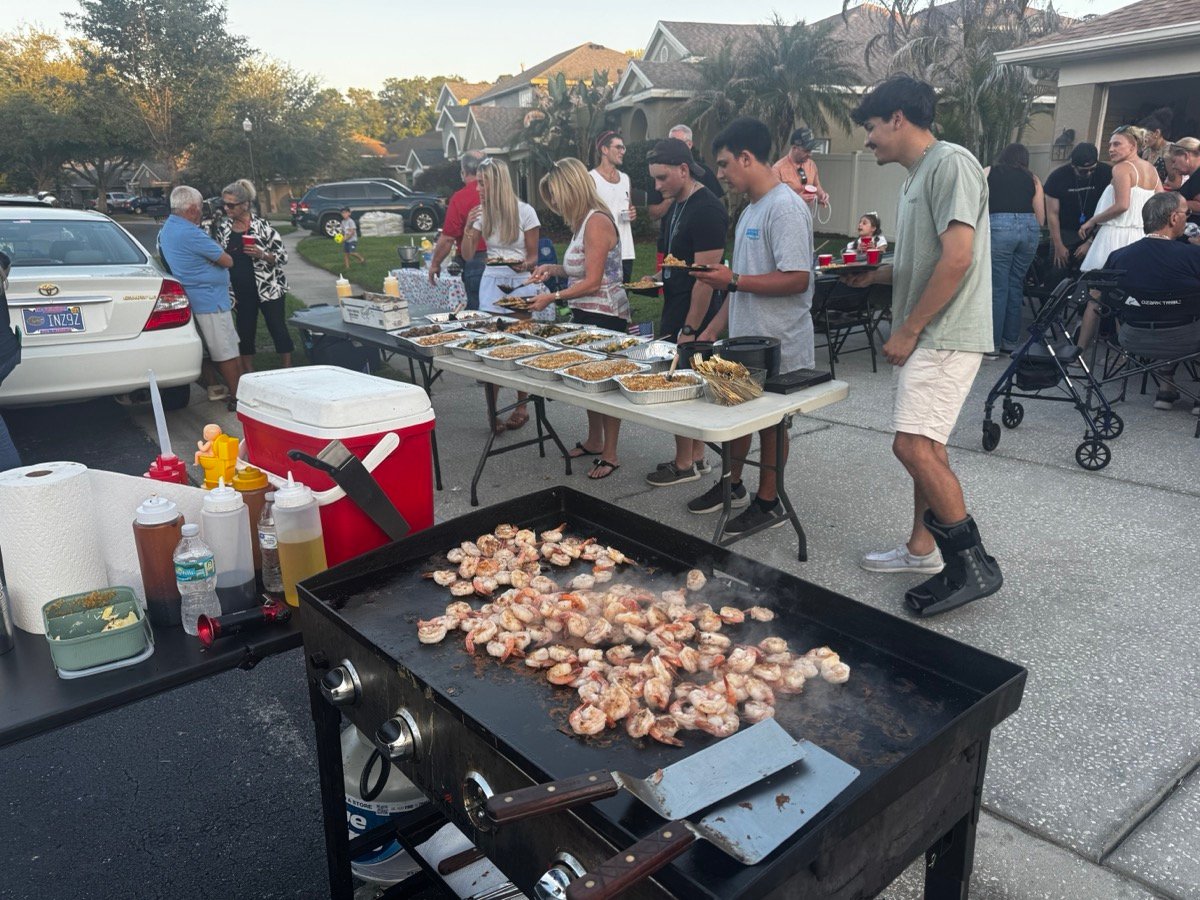
A large yard gives hosts room to turn dinner into an event. For family reunions, graduation parties, corporate gatherings, holiday celebrations, and backyard birthday parties, outdoor hibachi catering can become the main attraction rather than simply the meal.
The advantage is not just capacity. It is layout flexibility.
A spacious yard can create distinct zones for cooking, dining, drinks, photos, children’s activities, gifts, dessert, and relaxed conversation. That separation makes guests feel more comfortable and gives the event a smoother flow.
Why Large Yards Improve the Hibachi Experience
When a professional hibachi chef has room to work, the performance is easier for guests to enjoy. The team can keep food service organized, maintain safer circulation around hot equipment, and create a more immersive dining environment.
A large yard can support:
– Multiple tables for larger guest groups.
– A dedicated hibachi cooking zone.
– Clear guest walkways.
– Extra space between the grill and nearby structures.
– Separate areas for beverages, appetizers, and desserts.
– Room for party rentals, tents, lighting, or décor.
– Easier access for equipment transport and setup.
– A weather-contingency plan with covered spaces or indoor transitions.
The National Fire Protection Association recommends placing grills well away from homes, deck railings, and overhanging branches; keeping children, pets, and combustible items at least three feet from the grilling area; checking propane systems for leaks; and never leaving cooking equipment unattended. These principles are especially useful when planning a backyard hibachi event.
A Large Yard Does Not Mean “No Planning Needed”
More space is helpful, but it can create its own problems when the layout is not intentional. An oversized lawn can make guests feel scattered, place the chef too far from the dining area, or leave important event elements disconnected.
The goal is to create a defined event footprint, not to use every corner of the yard.
A practical backyard hibachi setup often includes:
| Event zone | Purpose |
|---|---|
| Cooking zone | Dedicated space for the hibachi chef, equipment, and safe working clearance |
| Guest viewing zone | Chairs or standing room where guests can enjoy the cooking performance |
| Dining zone | Tables positioned close enough for convenient service but outside the active cooking area |
| Welcome zone | A simple location for guests to arrive, greet the host, and find drinks |
| Beverage and dessert zone | Keeps traffic away from the chef’s work area |
| Children’s activity zone | Helps keep games and play away from hot cooking equipment |
| Rain or heat backup zone | Covered patio, tent, screened porch, or indoor room for weather changes |
This zoning approach is especially valuable for large birthday celebrations, company dinners, and graduation parties where guests arrive at different times and move between activities.
Space Planning Starts With the Chef’s Work Area
The most important measurement is not the total size of your balcony or yard. It is the open, unobstructed area available for the chef’s cooking station and the immediate safety perimeter around it.
Hosts should avoid planning around fixed furniture, decorative items, children’s toys, pet areas, low branches, umbrellas, hanging lights, pool edges, stairways, outdoor kitchens, or narrow passages.
A Practical Site-Check Checklist
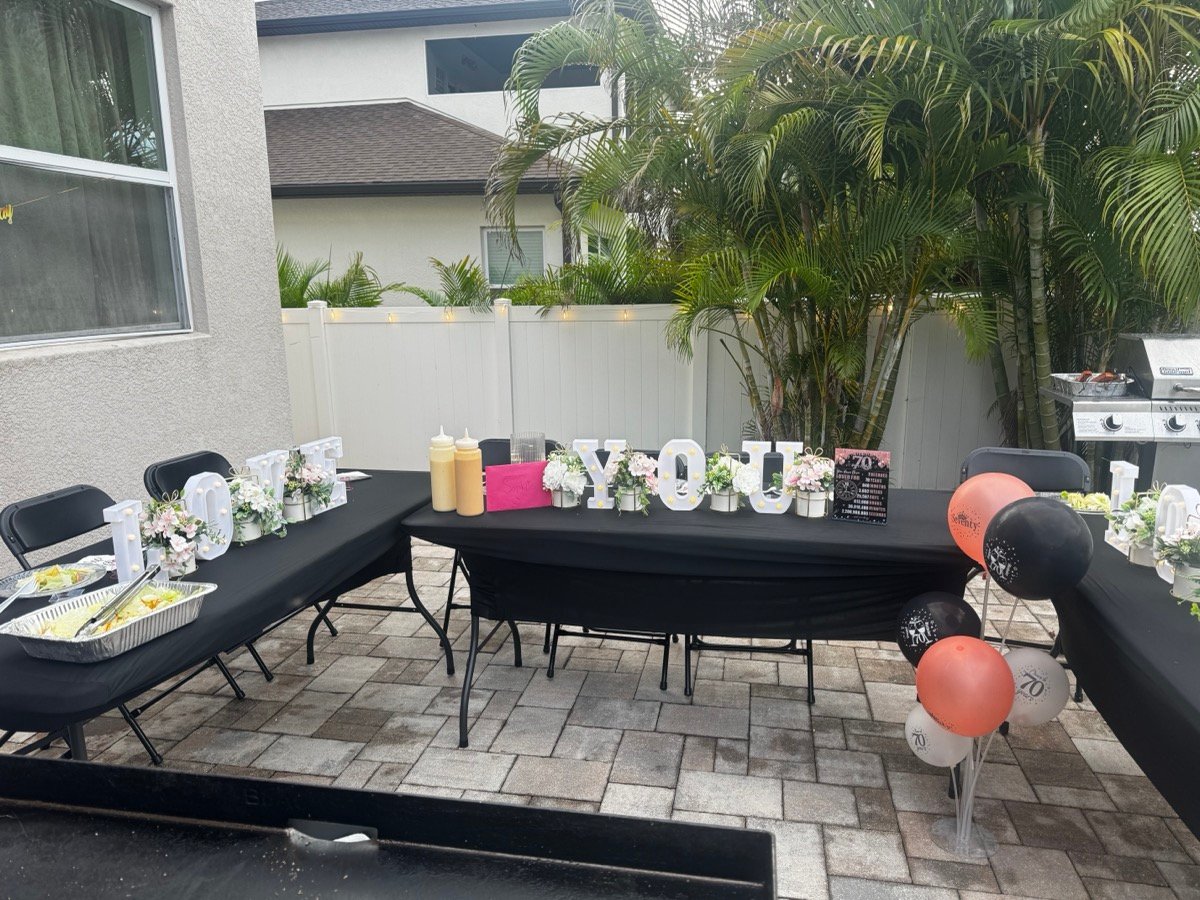
Before requesting a quote for hibachi grill catering, take a few minutes to review the site.
1. Measure the primary event area.
Measure the length and width of the usable outdoor space. Do not include areas blocked by furniture, planters, grills, gates, or permanent fixtures.
2. Photograph the space from several angles.
Take photos from the house-facing side, yard-facing side, access route, gate, driveway, and proposed cooking location. Daytime photos are usually best for planning.
3. Check overhead conditions.
Note tree branches, rooflines, awnings, umbrellas, patio covers, balcony ceilings, power lines, string lights, or hanging decorations.
4. Map guest movement.
Think about where guests will enter, sit, watch, eat, use the restroom, get drinks, and move around the property. Avoid creating bottlenecks near the chef station.
5. Identify service access.
A beautiful backyard is less practical if the team must carry equipment through a narrow side gate, up multiple flights of stairs, across loose gravel, or through a crowded home.
6. Confirm property and community rules.
Check with your HOA, landlord, condominium association, venue coordinator, or rental host before finalizing an outdoor cooking event.
7. Plan for weather.
In Florida, Georgia, South Carolina, and North Carolina, outdoor celebrations can face heat, humidity, rain, wind, and seasonal temperature changes. Discuss a covered option or indoor transition plan in advance.
Balcony vs. Yard: Safety, Access, and Comfort Comparison
The following table helps hosts make a faster decision before booking private hibachi catering.
| Decision point | Small balcony | Large yard |
|---|---|---|
| Is the cooking location open to the sky? | Must be verified carefully | Often easier to identify an open location |
| Is the space near structures or railings? | Usually yes | Can usually be positioned farther away |
| Is guest circulation limited? | Often | Less likely with intentional layout planning |
| Is equipment access difficult? | Frequently, especially with stairs or elevators | Often easier through a driveway, gate, or side entrance |
| Can the party include additional entertainment? | Limited | More adaptable for music, games, décor, and photo areas |
| Are building rules likely to affect the event? | Very likely in condos and apartments | Possible, especially with HOAs, but often simpler |
| Can the host add a tent or backup area? | Usually difficult | More feasible |
| Is a private chef atmosphere possible? | Yes, for an approved small-format event | Yes, with a more expansive party format |
The Hidden Factor: Access Routes Can Decide the Event
Many hosts focus on the final cooking location and forget the route leading to it. For mobile hibachi catering, access is a major part of operational planning.
A large backyard behind a narrow townhouse may be harder to service than a smaller patio with direct driveway access. Similarly, a balcony may be physically large enough but inaccessible if equipment must travel through a small elevator, long hallway, or multiple staircases.
When reviewing your space, consider:
– Parking availability for the mobile hibachi team.
– Distance from the vehicle to the setup area.
– Gate width and side-yard clearance.
– Steps, slopes, loose stones, or uneven surfaces.
– Elevator availability and building delivery restrictions.
– Doorway width.
– Whether guests will arrive before or after setup begins.
– Whether the path remains clear during cleanup.
A site that is easy to access often leads to a smoother arrival, faster setup, and more relaxed event start.
How Guest Count Changes the Best Choice
Guest count should influence your decision early. A common planning mistake is inviting a large group first and then attempting to make a small outdoor area work.
Instead, start with the space and event goal.
Choose a Small Balcony Format When
A small balcony or terrace can be a strong option when:
– You want a private dinner feeling rather than a large party.
– Your guest list is intentionally limited.
– Property rules clearly permit the proposed setup.
– The area is open, accessible, and free from restrictive overhead features.
– You have an indoor dining area nearby.
– You want a milestone dinner, date-night celebration, or close-family gathering.
– You are comfortable keeping décor and furniture minimal.
Choose Large Yard Hibachi Catering When
A large yard is usually the better choice when:
– You are hosting a birthday party, graduation, reunion, holiday event, or company gathering.
– You expect children, multiple families, or guests arriving throughout the evening.
– You want guests to watch the hibachi performance together.
– You want a bar, dessert table, DJ, games, photo wall, or lounge seating.
– You need a weather backup option.
– You want more flexibility for tables, traffic flow, and party décor.
– You prefer a relaxed outdoor event where guests can spread out.
Expert Planning Insight: Design for Flow, Not Maximum Capacity
The best private hibachi events do not try to fit the maximum number of people into every available inch. They create a flow that feels easy.
A well-designed event allows guests to move naturally from arrival to drinks, from the hibachi show to dinner, and from dessert to conversation. The chef has room to perform. Servers or hosts can move without interruption. Children stay away from the active cooking zone. The host can actually enjoy the party.
For large yard hibachi grill catering, a good rule is to leave open space around the main cooking area rather than placing every chair directly against the grill. A little breathing room improves visibility, heat comfort, safety, and the overall premium feel of the event.
For a small balcony, the same principle applies at a smaller scale. Avoid crowding the chef with furniture or guests. A simpler setup often creates a more luxurious experience than an overfilled space.
Regional Considerations for Southern Outdoor Events
Hibachi Sake Sake serves clients across Florida, Georgia, South Carolina, and North Carolina, where outdoor entertaining is popular but conditions can change quickly.
Florida
Florida events often require proactive planning for heat, afternoon rain, humidity, and pool-area traffic. Hosts should consider shade, hydration, insect management, and a rain backup plan.
Georgia
Georgia backyards can be excellent for family-style hibachi parties, particularly when hosts plan around warm weather, seasonal storms, uneven lawns, and neighborhood parking limitations.
South Carolina
Coastal and inland South Carolina properties may experience humidity, wind, rain, and variable ground conditions. A stable, open cooking location is important, especially for waterfront or beach-adjacent homes.
North Carolina
North Carolina offers strong opportunities for patio and yard celebrations, but hosts should consider seasonal temperature shifts, wind, hilly terrain, and covered-space options during spring, fall, or cooler evenings.
Local fire rules and property-specific requirements vary by city, county, neighborhood, and venue. In some jurisdictions, mobile or temporary cooking operations may require inspection, fire-safety equipment, leak checks, or operational approval before cooking begins. For example, DeLand, Florida outlines inspection and setup requirements for mobile cooking operations and references commercial cooking fire-safety standards.
Questions to Ask Before Booking Hibachi Catering
Use these questions when speaking with a mobile hibachi catering provider:
– What is the minimum open space needed for the proposed chef station?
– Can the service operate at my condo, apartment, vacation rental, balcony, patio, or yard?
– What information should I provide in photos or measurements?
– Are there access limitations for stairs, elevators, narrow gates, or long walking distances?
– What weather conditions may require a backup plan?
– How should I arrange tables and guest seating?
– Is there a recommended location for children and pets during the cooking performance?
– What building or HOA approvals should I obtain before the event?
– How early should the team arrive for setup?
– Can the layout support my guest count comfortably?
These questions help prevent last-minute changes and allow the chef team to recommend a setup that matches the property.
Make Your Space Work for the Celebration
Whether you have a compact balcony, a private patio, a pool deck, or a spacious backyard, the best hibachi event begins with an honest site assessment. A small balcony can support a thoughtful, intimate chef experience when access, permissions, ventilation, and clearances are appropriate. A large yard is generally the stronger choice for bigger gatherings, elaborate celebrations, flexible seating, and a full outdoor hibachi party atmosphere.
Hibachi Sake Sake can help you think through your event layout before the celebration. Share your event date, city, guest count, occasion, and a few photos of the outdoor area. Our team can help you identify the most practical setup for a memorable private hibachi experience in Florida, Georgia, South Carolina, or North Carolina.
Ready to turn your home into the setting for an unforgettable hibachi celebration? Contact Hibachi Sake Sake today to discuss your space, guest list, and preferred event date.
FAQ
1. Can hibachi catering be set up on a small balcony?
It may be possible only when the balcony is suitable, accessible, open-air, approved by the property owner or manager, and compliant with applicable local rules. Many apartment, condo, hotel, and rental properties restrict live cooking equipment on balconies, especially near structures or under overhangs. Always confirm approval before booking.
2. How much yard space do I need for hibachi grill catering?
The amount of space depends on the equipment, guest count, furniture layout, property access, and required safety clearance. A professional team should review photos, measurements, and the proposed cooking area before confirming the event plan.
3. Is a backyard better than a balcony for a hibachi birthday party?
For most birthday parties, a backyard is more flexible because it provides more room for guests, seating, the cooking performance, drinks, cake, décor, and safe movement. A balcony is usually better for a smaller, more intimate gathering.
4. Can guests sit close to the hibachi grill?
Guests should be positioned where they can enjoy the performance without entering the active cooking area or blocking the chef’s movement. Children, pets, and combustible items should be kept at least three feet away from the grill area, consistent with NFPA grilling-safety guidance.
5. What should I send a hibachi catering company before the event?
Send your event date, location, guest count, occasion, desired service time, photos of the setup area, access-route photos, and any known restrictions from your HOA, landlord, condo association, venue, or rental property.
6. Can I host a hibachi party in a rental home or vacation property?
Possibly, but you should obtain permission from the property owner or manager first. Short-term rentals may have rules about grills, live cooking, guest count, parking, noise, outdoor gatherings, and vendor access.
7. What happens if it rains during an outdoor hibachi event?
Discuss a weather contingency plan before your event. Depending on the property and service plan, options may include a covered patio, tented area with suitable clearance, indoor dining after cooking, rescheduling, or another approved location.
8. Do large hibachi parties need a separate area for children?
Yes. For family events, designate a play or activity zone away from the cooking station and guest traffic. This helps children enjoy the party while supporting a safer and smoother chef performance.
References
– [U.S. Census Bureau — American Housing Survey]
– [National Fire Protection Association — Grilling Safety Facts & Resources]
– [National Fire Protection Association — Fire Code Grill Requirements]
– [City of DeLand, Florida — Mobile and Temporary Cooking Operations]
– [East Providence Fire Department — Grilling Safety]
Hot Tags: Hibachi Catering, Mobile Hibachi Catering, Private Hibachi Chef, Backyard Hibachi Party, Hibachi Party Catering, Outdoor Hibachi Catering, Hibachi Grill Rental, Private Chef Catering, Corporate Event Catering, Luxury Event Catering