
Content Menu
● Hibachi at Home vs Steakhouse: Which Experience Truly Delivers?
● What Is a Japanese Steakhouse Hibachi Experience?
● Side‑by‑Side: Hibachi at Home vs Steakhouse
● Cost and Value: Which Option Makes More Sense for Groups?
● Convenience and Logistics: Stress‑Free Hosting vs Night Out
● Food Quality and Menu Customization
>> Ingredient sourcing and flavor
>> Customization at home vs restaurant
● Atmosphere and Entertainment: Show vs Shared Spectacle
● Safety, Comfort, and Accessibility
● Expert Insight: Why Hibachi at Home Is Surging in 2026
● Practical Steps to Plan a Hibachi at Home Event
● When a Steakhouse Still Makes Sense
● Final Verdict: Which Should You Choose?
● Call to Action: Bring the Grill to You
● FAQs
Hibachi at home and Japanese steakhouse dining both deliver fire, flavor, and showmanship—but for groups in Florida, Georgia, South Carolina, and North Carolina, a private backyard hibachi experience is often the smarter, more memorable choice. [hibachiguru]
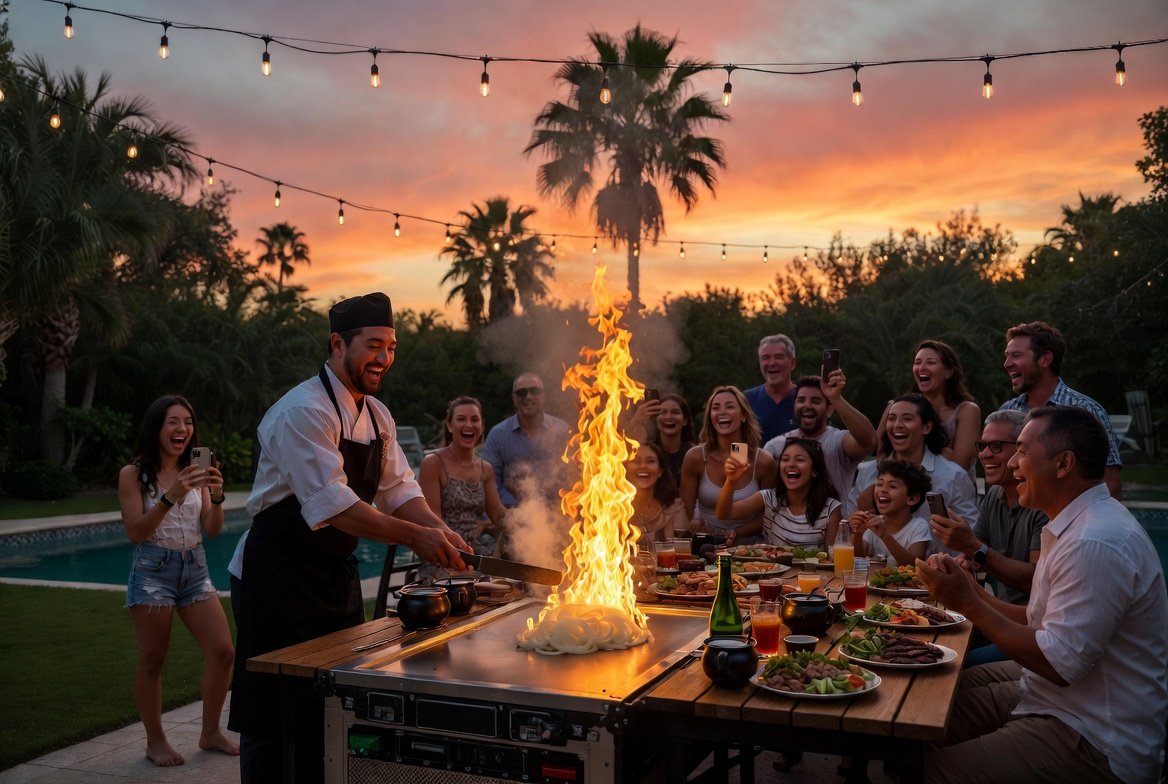
Hibachi at Home vs Steakhouse: Which Experience Truly Delivers?
When people picture hibachi, they usually imagine a bustling Japanese steakhouse: shared tables, roaring grills, and a chef juggling spatulas in front of a crowd. Yet in recent years, private hibachi at home—with a mobile teppanyaki chef setting up right in your backyard or driveway—has exploded in popularity across the Southeast. [chowhound]
As someone who works closely with mobile hibachi brands and sees how real families and companies book these events, I’ve watched a clear shift: hosts want restaurant‑quality food and performance, but they don’t want the hassle, noise, or loss of privacy that often comes with a busy steakhouse. In this guide, we’ll compare hibachi at home vs the steakhouse in depth—cost, experience, logistics, food quality, and more—so you can choose the right option for your next birthday, graduation, or corporate event. [hibachiwithus]
What Is Hibachi at Home?
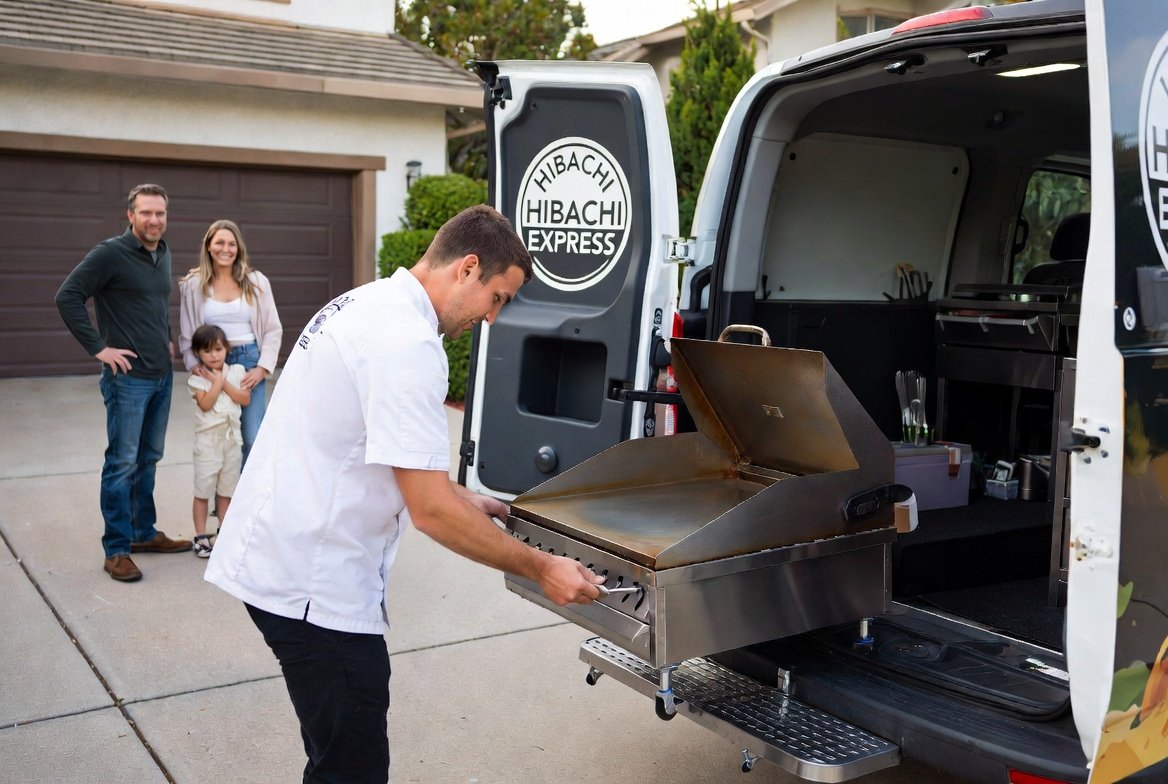
Hibachi at home (also called mobile hibachi or backyard teppanyaki) brings a professional chef, grill, ingredients, and show directly to your location—your backyard, pool deck, driveway, rental home, or even a corporate parking lot. [hibachiwithus]
Typical inclusions:
– Professional hibachi chef with full teppanyaki setup. [hibachiwithus]
– Grill, propane, cooking tools, and sauces brought to your site. [hibachisake]
– Set menus with fried rice, noodles, vegetables, salad, and proteins like steak, chicken, shrimp, and salmon. [hibachiwithus]
– Live show elements such as fire effects, onion volcano, egg toss, and sake (if desired and legal). [chowhound]
– Setup and cleanup handled by the hibachi team, so hosts can relax. [hibachiwithus]
Many providers serve wide areas—for example, mobile hibachi caterers travel across metro Atlanta and into parts of Florida, the Carolinas, and Virginia, focusing on birthdays, holidays, and private events. [hibachisake]
What Is a Japanese Steakhouse Hibachi Experience?
Japanese steakhouses and teppanyaki restaurants are brick‑and‑mortar venues where multiple parties share tables around built‑in iron griddles. Guests sit around the teppan while a chef cooks in front of them, often incorporating tricks like flaming onion volcanoes and flying shrimp. [kobesteakhouse]
Core characteristics:
– Restaurant‑based teppanyaki griddles built into communal tables. [benihana]
– Set seating times and reservations, especially on weekends or holidays. [phoenixmag]
– Shared table with other groups, unless you buy out the entire table. [phoenixmag]
– Strong focus on showmanship and fast‑paced service. [tastingtable]
– Controlled indoor environment with professional ventilation, decor, and music. [chowhound]
Steakhouses are great for smaller groups who don’t mind traveling and sharing their experience with others. [benihana]
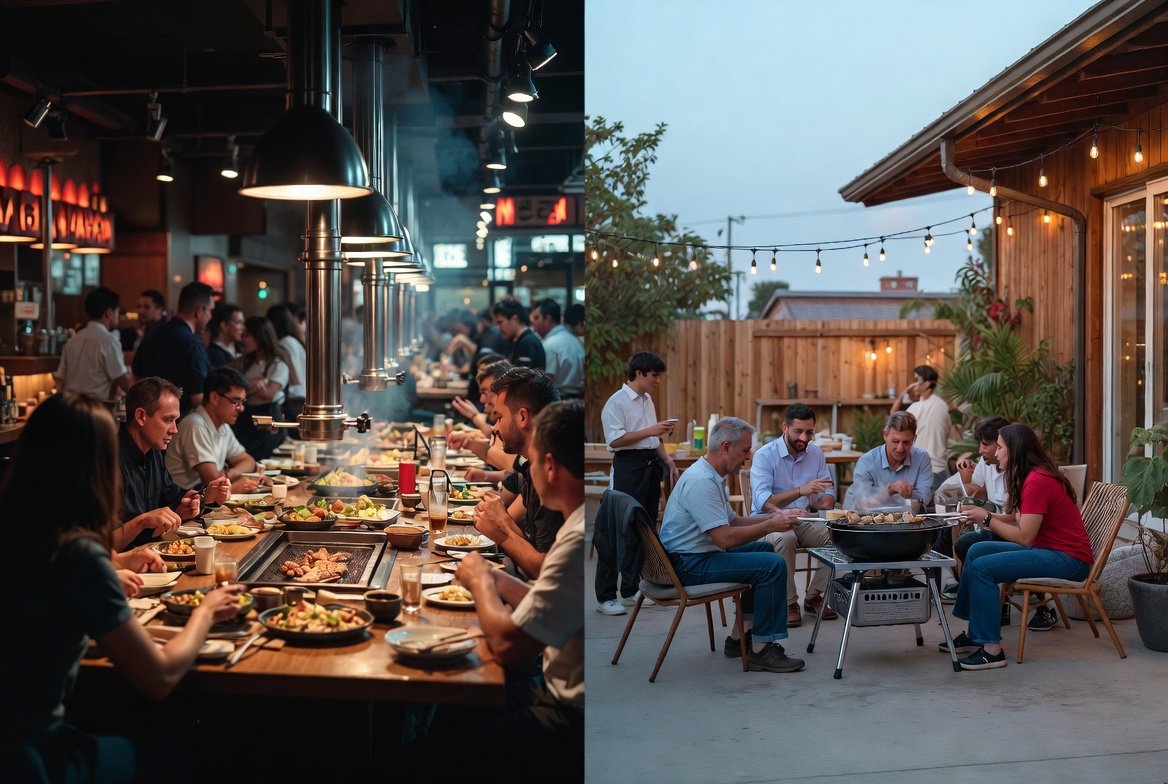
Side‑by‑Side: Hibachi at Home vs Steakhouse
| Factor | Hibachi at Home | Japanese Steakhouse |
|---|---|---|
| Setting | Your home, backyard, rental, or venue | Restaurant dining room |
| Privacy | Fully private, only your guests | Often shared tables with other parties |
| Group size | Ideal for families, birthdays, corporate groups | Good for couples, small groups, mixed parties |
| Experience | Personalized pacing, chef focuses only on you | Fast, energetic, multiple tables per chef |
| Travel | Chef comes to you | Everyone drives to the restaurant |
| Cost model | Per person or flat event fee; travel minimums | Per person; add‑ons and drinks increase total |
| Atmosphere | Customizable music, decor, dress code | Controlled by restaurant brand |
| Cleanup | Handled by catering team | No cleanup at home, but travel time for guests |
Cost and Value: Which Option Makes More Sense for Groups?
From an industry perspective, the economics are where hibachi at home often wins for groups of 10 or more.
Pricing structure
– Many mobile hibachi services charge around a set per‑person rate with a minimum event total (for example, a minimum food spend of several hundred dollars plus potential travel fees). [hibachiwithus]
– Some brands, like Hibachi Sake Sake–style offerings, use a flat chef fee model (for instance, a fixed rate per chef per event) that allows you to host a sizable group and control your budget. [hibachisake]
– Children often have reduced pricing, and kids under a certain age may eat free. [hibachiwithus]
By contrast, Japanese steakhouses typically:
– Charge per entrée, plus appetizers, drinks, tax, and tip. [phoenixmag]
– Add significant cost when you factor in parking, bar tabs, and potential table minimums for larger parties. [chowhound]
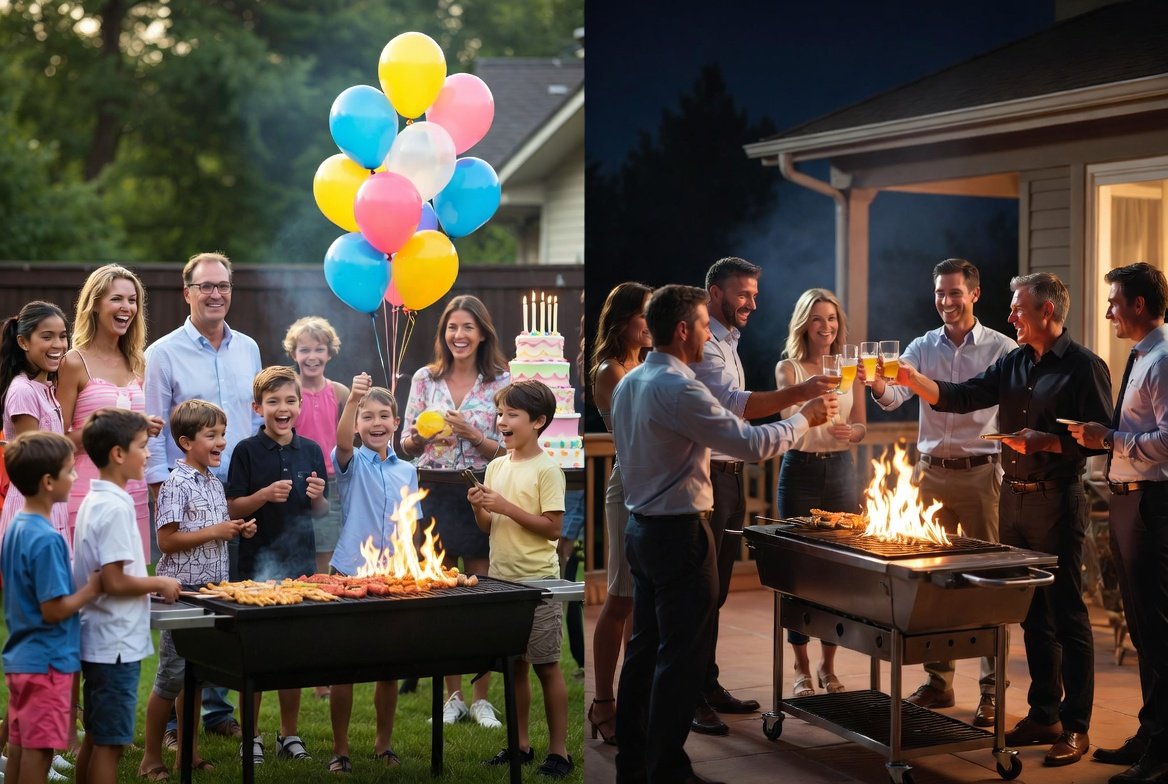
For a family birthday or graduation with 15–25 guests, a private hibachi event frequently delivers more food, more flexibility, and more control over the final bill than dining out at a high‑traffic steakhouse. [hibachiguru]
Convenience and Logistics: Stress‑Free Hosting vs Night Out
As a UX‑minded host, you’re not just buying food—you’re buying friction reduction.
Hibachi at home advantages
1. No driving for guests
Everyone gathers at a single location, which is ideal for families with kids, older relatives, or guests who prefer not to drive at night. [hibachiwithus]
2. No reservations or waitlists
You choose the date and time, and the chef arrives when scheduled—no sitting in a crowded lobby hoping your table is nearly ready. [hibachiwithus]
3. Flexible layouts
Arrange the grill around your pool, patio, or backyard so it works with your space and your event theme. [falstaff]
4. Integration with other activities
You can add yard games, a projector for game night, or a photo corner without worrying about restaurant rules. [forbes]
Steakhouse advantages
– Predictable indoor environment and seating. [phoenixmag]
– No need to clear space or think about weather. [chowhound]
– Staff handles everything on‑site, though they don’t help with pre‑ or post‑event logistics at your home. [phoenixmag]
For birthdays, homecomings, or corporate events where you want people to stay together before and after the meal, hibachi at home usually creates a smoother experience from door to dessert. [hibachiguru]
Food Quality and Menu Customization
Many people assume restaurant steak automatically means better quality, but in practice, ingredients and technique travel surprisingly well.
Ingredient sourcing and flavor
– Hibachi restaurants often have access to prime cuts, high‑quality oils, and generous amounts of butter, seasonings, and even MSG, which amplify flavor. [chowhound]
– Professional mobile hibachi chefs use similar techniques on their portable flat‑top grills, delivering that same seared, umami‑rich flavor profile in a home setting. [kaijinbuffet]
Customization at home vs restaurant
At most steakhouses, you can choose protein and doneness, but substitutions, timing, and special requests are constrained by the menu and fast pace of service. [benihana]
In a private hibachi at home event, the chef can:
– Adjust spice levels across different plates. [hibachiwithus]
– Serve kids first and customize portion sizes. [hibachiwithus]
– Accommodate allergies or dietary restrictions more easily when informed in advance. [hibachiwithus]
– Pace the meal to match your celebration schedule instead of the restaurant’s turn‑and‑burn model. [hibachiwithus]
For hosts planning inclusive events with vegetarians, picky eaters, and food‑curious guests at the same table, that level of menu flexibility becomes a major advantage. [hibachiguru]
Atmosphere and Entertainment: Show vs Shared Spectacle
Both hibachi at home and steakhouses deliver live cooking and dramatic visuals, but the context makes the experience feel very different.
At‑home ambiance
– You control the music, lighting, decor, and dress code, so the vibe can be elegant, casual, or themed. [falstaff]
– The chef focuses only on your group, which means more interaction, inside jokes, and personalized pacing. [hibachiwithus]
– Guests can move around freely—kids can play between courses, adults can mingle without disrupting other tables. [hibachiwithus]
Steakhouse ambiance
– High‑energy environment with multiple tables sizzling at once. [phoenixmag]
– Chef attention is divided among everyone seated at the grill, including other parties. [benihana]
– Noise levels and lighting are controlled by the restaurant brand, not your group. [chowhound]
If your goal is a once‑in‑a‑lifetime private celebration—proposal, milestone birthday, or intimate corporate outing—hibachi at home tends to feel more exclusive and tailored. [forbes]
Safety, Comfort, and Accessibility
From a host’s perspective, safety and comfort are non‑negotiable, especially when children and older guests are involved.
Comfort considerations
– At home, guests can step inside to cool off, warm up, or put kids to bed while the event continues. [hibachiwithus]
– You can control crowd size and seating to accommodate wheelchairs, strollers, or mobility devices more easily than in tightly packed restaurant aisles. [hibachiwithus]
Fire and food safety
Professional hibachi caterers are used to working in residential environments; they set up in safe, open spaces and manage propane or gas according to best practices. Restaurants operate under strict fire codes and commercial ventilation systems, which is reassuring but less flexible if you have guests who are sensitive to noise, smoke, or crowds. [tastingtable]
For many families, keeping everything on home turf feels safer and more manageable than transporting a large group to a busy steakhouse and back. [hibachisake]
Expert Insight: Why Hibachi at Home Is Surging in 2026
Looking at broader restaurant and hospitality trends, chefs and analysts highlight a few key shifts:
– 2026 is seeing a rise in intentional, experience‑driven dining, where guests seek deeper connection, not just a quick meal. [forbes]
– Outdoor kitchens and backyard entertaining continue their growth as homeowners invest more in flexible, design‑forward outdoor spaces. [falstaff]
– Mobile concepts—from food trucks to pop‑up chefs—are expanding into suburban and residential neighborhoods, offering restaurant‑grade experiences without the overhead of a full dining room. [falstaff]
Hibachi at home sits right at the intersection of these trends: it’s immersive, social, and rooted in global flavors, but it unfolds on your terms, in your space, with your guest list. [hibachifamily]
Practical Steps to Plan a Hibachi at Home Event
To turn the idea into a seamless experience, follow these simple steps:
1. Define your guest list and budget
Decide how many adults and children you’ll host, and what you’re comfortable spending per person or for the chef fee. [hibachisake]
2. Confirm service area and date
Check that your location in Florida, Georgia, South Carolina, or North Carolina is within the provider’s coverage and lock in your preferred date early, especially for weekends and holidays. [hibachisake]
3. Plan the layout
Identify a flat, open-space area (driveway, patio, or backyard) for the grill and seating. Ensure access to parking and a clear path for equipment. [hibachiwithus]
4. Customize your menu
Choose proteins, sides, and any vegetarian or allergy‑friendly options in advance so your chef can prep accurately. [hibachiwithus]
5. Add your personal touches
Layer in decor, music, lawn games, or a dessert table to align the experience with your theme—birthday, graduation, holiday, or corporate event. [forbes] 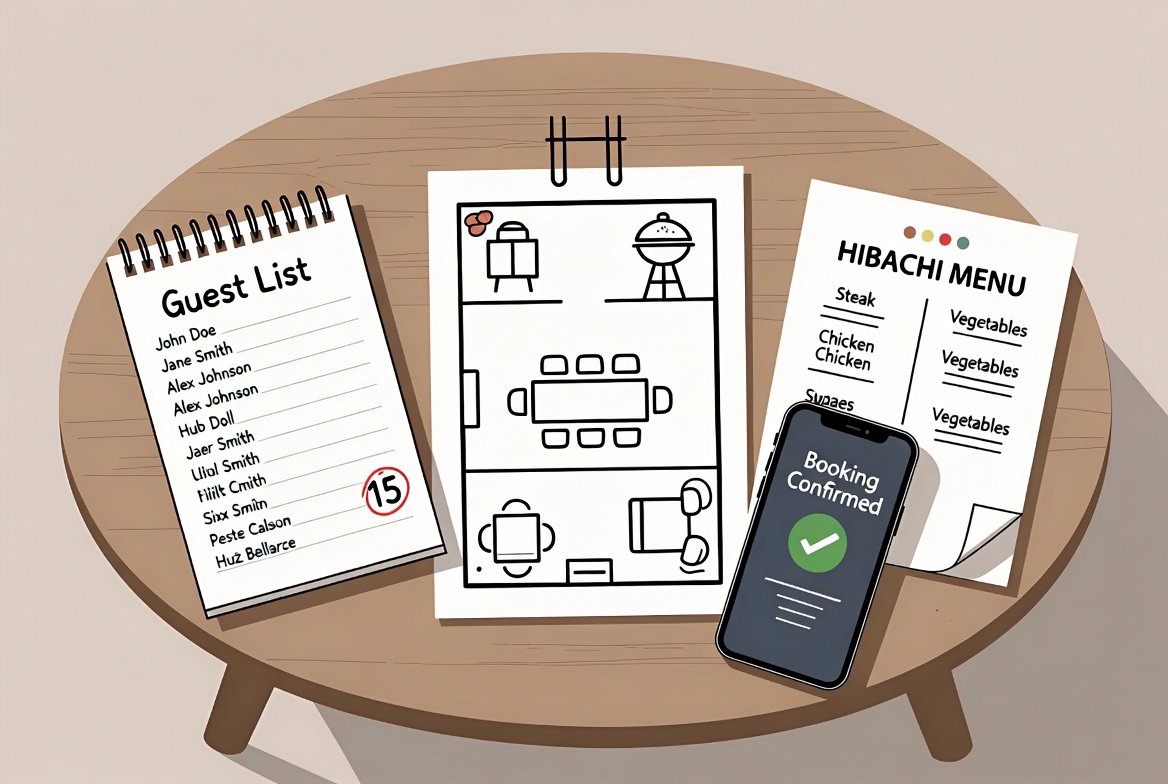
When a Steakhouse Still Makes Sense
Despite the clear advantages of hibachi at home for many hosts, there are situations where a traditional restaurant shines:
– Very small groups or date nights who don’t need a full chef event. [benihana]
– Guests who love exploring new restaurants, cocktails, and urban nightlife. [forbes]
– Travelers staying briefly in a city who can’t coordinate home or rental‑based catering. [tokyogrill]
If you fall into these categories, the energy and convenience of a Japanese steakhouse can be exactly what you’re looking for. [benihana]
Final Verdict: Which Should You Choose?
If you want a private, tailored, and highly social experience for birthdays, family gatherings, holidays, graduation parties, corporate events, or luxury private dinners in Florida, Georgia, South Carolina, or North Carolina, hibachi at home is usually the better fit. You gain more control, more flexibility, and more time together—with the same fire, flavor, and performance you’d expect from a Japanese steakhouse. [kaijinbuffet]
For small, spontaneous nights out or travelers passing through, a well‑run teppanyaki steakhouse still provides an impactful dinner‑and‑a‑show experience in a polished restaurant setting. [tastingtable]
Call to Action: Bring the Grill to You
If you’re planning an upcoming celebration in Florida, Georgia, South Carolina, or North Carolina and want to skip the crowds, lines, and rigid seating times, consider booking a private hibachi chef to come directly to you. Secure your preferred date early—especially for weekends, holidays, and graduation season—so your group can enjoy a fully customized, restaurant‑quality hibachi show without ever leaving home. [hibachiguru]
FAQs
1. Is hibachi at home more expensive than going to a steakhouse?
For large groups, hibachi at home is often more cost‑effective because pricing is clear upfront and you avoid extra bar tabs, parking, and travel costs, especially when a flat chef fee or per‑person rate with a modest minimum is used. [hibachiguru]
2. How much space do I need for a backyard hibachi setup?
Most mobile hibachi teams can work comfortably in a standard driveway, patio, or open backyard area, as long as the grill and seating fit safely with enough clearance around the cooking zone. [hibachiwithus]
3. What if the weather is bad on the event day?
Many hosts place the grill under a covered area or tent and keep guests under canopies or indoors nearby, while some providers can reschedule case‑by‑case depending on their policies and availability. [falstaff]
4. Are mobile hibachi chefs licensed and insured?
Reputable providers operate as professional caterers with appropriate licensing, food‑handling certifications, and insurance; always confirm these details when booking. [hibachiwithus]
5. Can hibachi at home accommodate dietary restrictions?
Yes—when notified in advance, chefs can adjust sauces, separate cooking zones, and plan vegetarian, pescatarian, or allergy‑friendly options that still keep guests fully included in the experience. [hibachiwithus]
References
– Hibachi at Home vs. The Steakhouse: 5 Reasons to Bring the Grill to Your Backyard – Hibachi Guru
<https://www.hibachiguru.com/blog/hibachi-at-home-vs-the-steakhouse-5-reasons-to-bring-the-grill-to-your-backyard> [hibachiguru]
– Hibachi vs Teppanyaki: What’s the Real Difference? – Kaijin Buffet
<https://kaijinbuffet.com/hibachi-vs-teppanyaki-whats-the-real-difference/> [kaijinbuffet]
– Teppanyaki vs Hibachi: What’s the Difference? – Kobe Steakhouse
<https://kobesteakhouse.com/teppanyaki-vs-hibachi-whats-the-difference/> [kobesteakhouse]
– Hibachi vs Teppanyaki: What’s the Difference? – Hibachi Family
<https://hibachifamily.com/hibachi-vs-teppanyaki-whats-the-difference/> [hibachifamily]
– Why Steak Tastes So Much Better From A Hibachi Grill – Chowhound
<https://www.chowhound.com/1590588/why-steak-tastes-better-hibachi-grill/> [chowhound]
– Hibachi at Home South Carolina – Hibachi With Us
<https://www.hibachiwithus.com/hibachi-at-home-south-carolina> [hibachiwithus]
– Dinner and a Show: Culinary Escapism at Kasai Scottsdale – Phoenix Mag
<https://www.phoenixmag.com/2020/09/01/dinner-and-a-show-culinary-escapism-at-kasai-scottsdale/> [phoenixmag]
– Hibachi Chef at Home – Sake House Hibachi
<https://www.sakehousehibachiathome.com> [sakehousehibachiathome]
– Hibachi vs Teppanyaki: What’s the Difference? – Benihana
<https://www.benihana.com/blog/difference-between-hibachi-and-teppanyaki/> [benihana]
– Hibachi at Home Atlanta, GA – Hibachi With Us
<https://www.hibachiwithus.com/hibachi-at-home-atlanta> [hibachiwithus]
– These Are The 2026 Restaurant Trends Chefs Are Betting On – Forbes
<https://www.forbes.com/sites/amberlovebond/2026/01/06/these-are-the-2026-restaurant-trends-chefs-are-betting-on/> [forbes]
– Hibachi Sake – Hibachi chef at home
<http://hibachisake.com> [hibachisake]
– The Key Difference Between Teppanyaki and Hibachi – Tasting Table
<https://www.tastingtable.com/1210505/the-key-difference-between-teppanyaki-and-hibachi/> [tastingtable]
– Tokyo Grill – Authentic Japanese Cuisine & Teppanyaki
<https://www.tokyogrill.com> [tokyogrill]
– Outdoor‑Küchen: Die wichtigsten Trends 2026 – Falstaff
<https://www.falstaff.com/living/news/outdoor-kuechen-die-wichtigsten-trends-2026> [falstaff]
Hot Tags: Hibachi At Home Catering, Private Hibachi Chef, Backyard Hibachi Party, Mobile Teppanyaki Service, Corporate Hibachi Events, Luxury Outdoor Dining, Japanese Steakhouse Alternative, On Site Hibachi Experience, Event Catering Florida Georgia Carolinas, Private Teppanyaki Dinner